

Fees are converted at approximate rates. The school confirms the final amount.
In short: UWC Robert Bosch College is a private, secular, co-ed international school in Freiburg, Germany. It offers the IB. Stages: high school (ages 16–19). Taught in English. 200 students.
 IB World School
Fees on request
The school shares its fees, enrolment and extras on request.
All students follow the two-year IB Diploma Programme, taught in English. They choose six subjects, three at higher level and three at standard level, and complete the Extended Essay, Theory of Knowledge and at least 150 hours of Creativity, Activity and Service. Literature courses are available in English, German, French, Arabic and Spanish, plus self-taught literature in the mother tongue, and language acquisition courses in English, German and French. Sciences include Biology, Chemistry, Physics and Environmental Systems and Societies, with sustainability built into teaching, and mathematics is offered in both IB routes.
The college covers only the final two years of secondary education (the Baccalaureate stage). Students join at around 16 and spend two years completing the IB Diploma Programme before graduating at about 18 or 19. There are no primary or lower secondary sections, and each year about 100 new students arrive through the UWC national committees.
The college shares the UWC mission of using education to unite people, nations and cultures for peace and a sustainable future. It is built on deliberate diversity, bringing together young people from many countries and social backgrounds. Inspired by Kurt Hahn and Robert Bosch, the school aims to develop responsibility, empathy and the ability to question one's own assumptions through intercultural exchange, open discussion and practical action. Peace and sustainability run through the curriculum and campus life.
English is the language of instruction, while about 60 other languages are spoken on campus. Some students arrive with strong English and others start from a low level, so teaching is adapted to mixed language backgrounds. In the IB, students can study literature in English, German, French, Arabic or Spanish, or in their mother tongue as a self-taught course, and can take English, German or French as an acquired language. Living in Freiburg also gives international students daily contact with German.
Kartäuserstraße 119, 79104 Freiburg im Breisgau, Baden-Wurttemberg, Germany
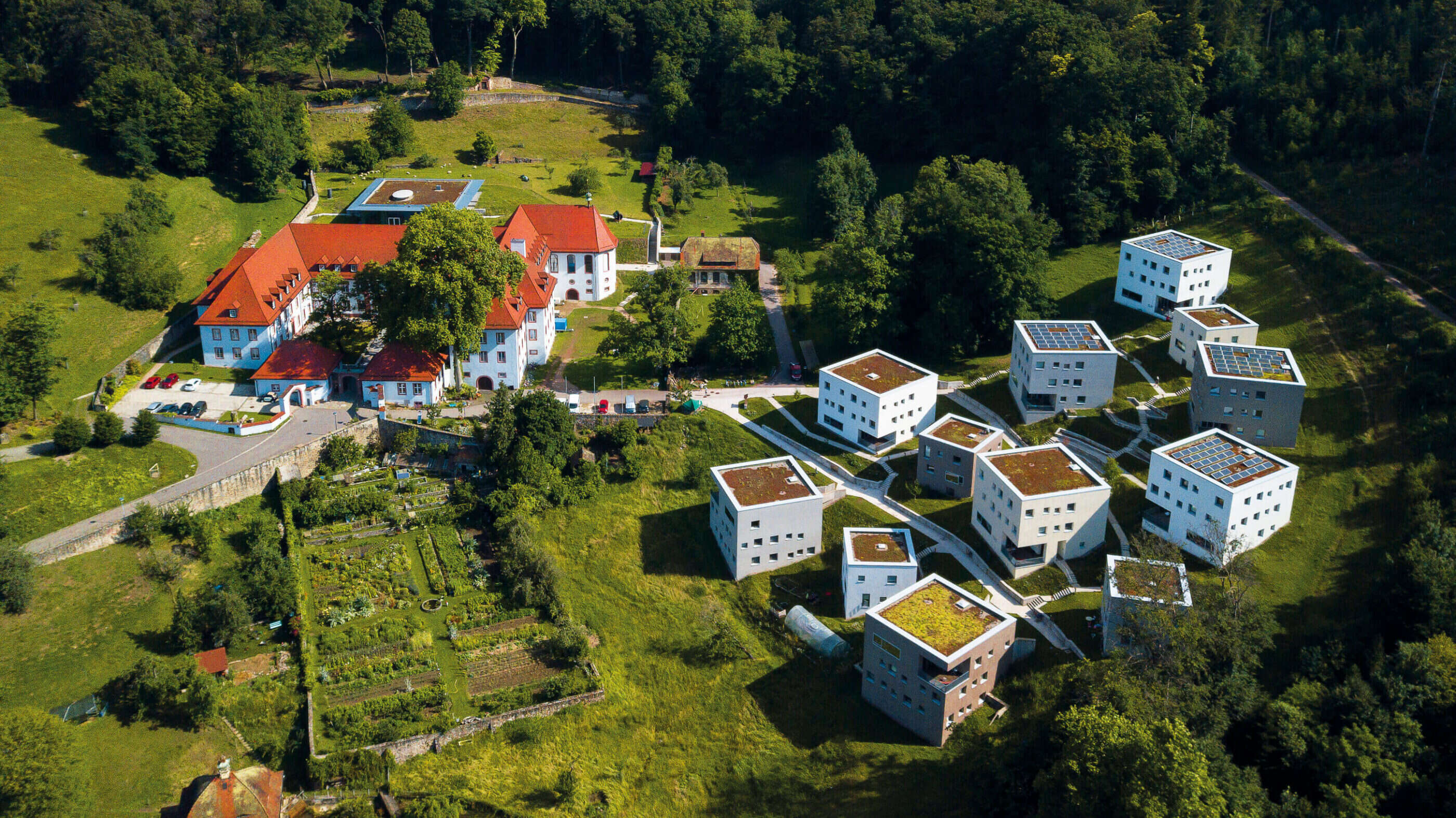
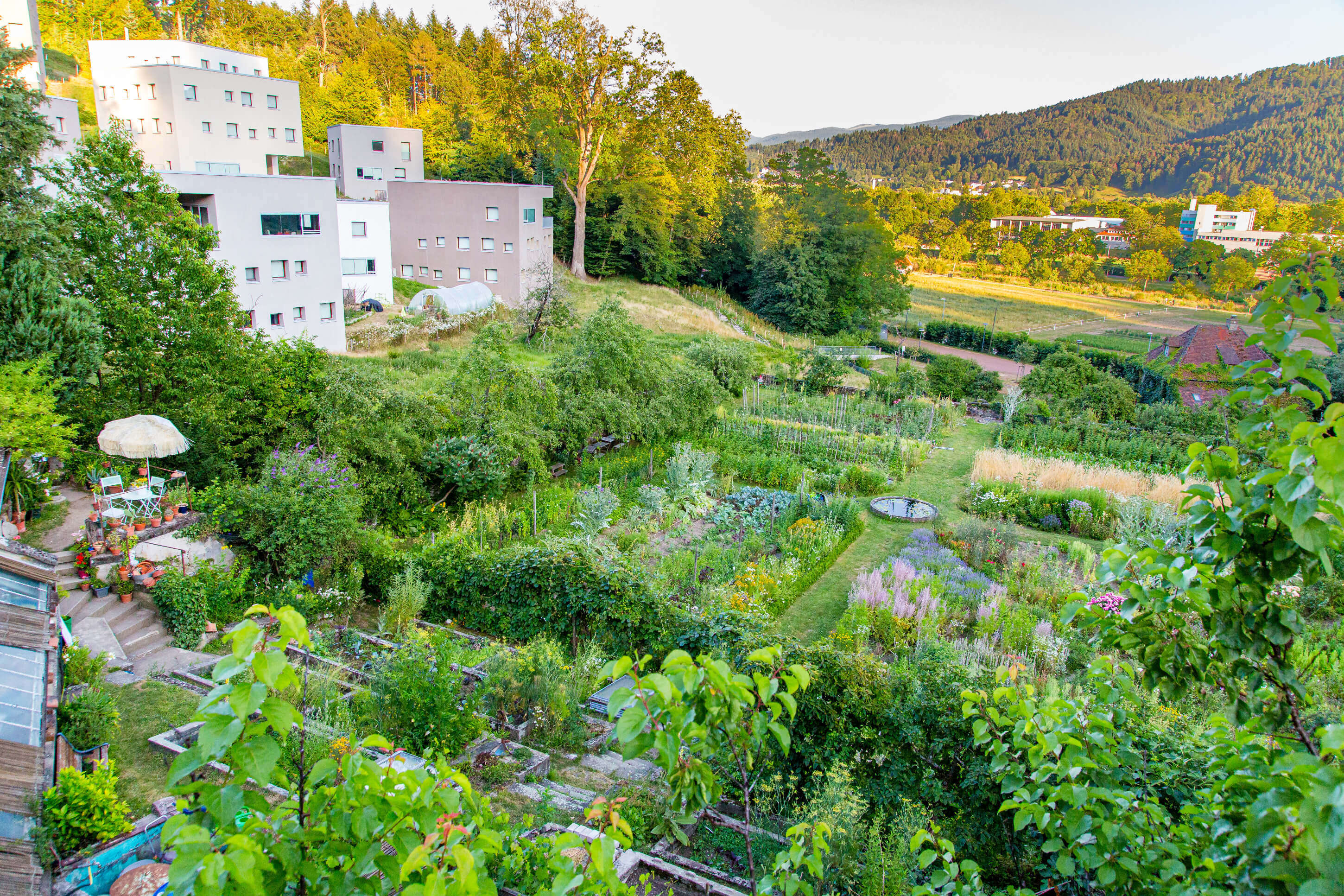
Lessons take place in the restored Kartause, a listed former monastery founded in 1347, which houses classrooms, laboratories, offices and the Weickart Library in the monks' former refectory with historic stained-glass windows. A wood-and-glass auditorium seats the whole school for events, drama, dance and music. Students live in a 'village' of cube-shaped houses on the hillside designed by architect Peter Kulka. The campus also has a canteen, a polytunnel greenhouse and a walled monastery garden of about 2,000 square metres, cultivated organically, and the college looks after a 19-hectare school forest nearby.
Each student has a personal tutor and a house tutor. A Health and Wellbeing Team, made up of school psychologists, the Director of Student Life, school nurses, academic advisors and social pedagogues, meets weekly, and a peer support programme trains students to help each other. Three meals a day are served in the canteen, run by an inclusive social enterprise using local, fresh and mostly vegetarian food. A careers counselling team helps students plan university, training or gap-year options worldwide.
RBC is fully residential. Students live in houses of 24 to 26 people, each with a common room, kitchen, balcony and bathrooms, and share rooms for four. Eight house tutors live alongside them. Houses hold weekly meetings and students are responsible for keeping them tidy. A host family programme links each student with a local family for two weekends a year.
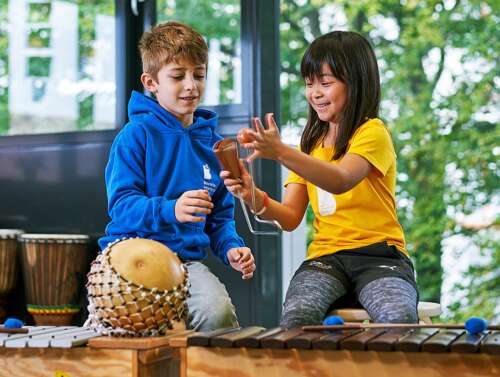
Extracurricular life runs through the CAS programme, with around 70 activities a term, most of them started and led by students, and some 40 community service projects, over 20 of them with partner organisations in Freiburg. Sport is offered through CAS using local clubs' halls and pitches, with events such as the Freiburg Marathon and football and basketball matches. The outdoor education programme includes hiking and camping weekends and mountain biking in the Black Forest. Students also take part in project weeks around Europe, the school garden and forest groups, music, dance and drama, and the monthly Global Affairs lecture series.
No reviews yet.


International Baccalaureate.
Lessons are taught in English. It also teaches German, Spanish, French and Arabic.
Press Enquire: your message goes to its admissions team, free.
Your details go only to this school.