Moving to Munich with kids: schools, areas and costs
Quick answer: What should families know before moving to Munich with kids? Register your address within two weeks, check Bavaria's 30 June school-start cut-off and book school visits early. For 2026-27 Bavarian International School charges €18,530 to €24,850 a year for Grades 1 to 12 and Munich International School €19,002 to €28,659, while city-run kindergartens are usually free apart from meals.
Last reviewed: November 2026 by Catherine from ISA. Fee ranges are indicative; always confirm with the school.
Key takeaways
- Under Article 37 of the Bavarian Education Act (BayEUG), children who turn six by 30 June start school that September; for birthdays from 1 July to 30 September, parents may defer by one year.
- Section 17 of the Federal Registration Act gives you two weeks after moving in to register your address, and section 19 obliges the landlord to confirm the move in writing.
- Munich's 2025 rent index (Mietspiegel) puts the average net cold rent at €15.38 per square metre a month, 5.5% more than in 2023.
- The BayKiBiG reform ends Bavaria's €100 monthly kindergarten subsidy on 1 January 2027; Munich keeps its current Kita fees until 31 August 2027.
A city-run kindergarten in Munich usually charges nothing for attendance, just €105 a month for meals, while an international early years place costs about €18,000 a year. That gap shapes most choices when moving to Munich with kids: where you live, whether a German Kita or an English-language class comes first, and how soon you need a school place.
What follows covers family areas and rents, Bavarian school rules, Kita costs as the 2027 reform arrives, three international schools with their 2026-27 fees, and the registration steps.
Where families settle when moving to Munich with kids
School location drives most house hunts, because international campuses are spread from the city centre to the lakes and the northern suburbs.
- Schwabing: north of the old town beside the English Garden; Bavarian International School runs its City Campus on Leopoldstraße for kindergarten to Grade 5.
- Bogenhausen and Haidhausen: leafy districts east of the Isar with older apartment blocks, a short ride from the centre.
- Freimann and Unterföhring: the north-eastern edge of the city and the municipality next door, close to St. George's The British International School Munich on Heidemannstraße.
- Starnberg: a lakeside town south-west of the city on the S-Bahn, home to Munich International School at Schloss Buchhof.
- Haimhausen: about 15 km north, where BIS has its main campus with primary and secondary classes.
On rent, the city's 2025 Mietspiegel gives an average net cold rent of €15.38 per square metre a month, so a 100 m² family flat at that average comes to about €1,540 before heating and service charges. The index describes rents in existing contracts rather than asking prices, so check current listings before you fix a budget.
When does school start in Bavaria?
Children who turn six by 30 June start school in September, under Article 37 BayEUG. If the birthday falls between 1 July and 30 September, parents can move the start back a year. Younger children may start early on request, and if they turn six after 31 December a school psychologist must confirm they are ready.
- Grundschule: covers grades 1 to 4 (Article 7), after which children move on to Mittelschule, Realschule or Gymnasium.
- Duration: full-time schooling lasts nine school years, and compulsory schooling twelve in total once vocational school is counted (Articles 35 and 37).
- German check: every child due to start school has a language assessment in the second-to-last kindergarten year. If their German will not be enough, the local primary school can require a state-funded Kita with an integrated German pre-course, for more than three hours a day, in the final year.
- School registration: parents must register a child at the school where they will complete compulsory schooling (Article 35).
If you are heading for an international school, ask early how these rules apply, especially the language assessment, which the law ties to the state primary school in your catchment.
How much does a Kita place cost in Munich?
In city-run kindergartens the attendance fee is usually zero and families pay the €105 monthly meal charge. Crèche (Krippe) and after-school (Hort) fees depend on booking hours and income, with reductions for households earning under €80,000 gross and for siblings.
- The 2027 reform: the BayKiBiG reform takes effect on 1 January 2027 and ends the state's €100 monthly subsidy for kindergarten children. Munich will hold fees in its own and city-funded Kitas until 31 August 2027.
- From September 2027: the city plans, at the longest booking times, €330 a month for a crèche place, €174 for kindergarten and €166 for Hort, with no fee for households on up to €50,000 a year and meals rising from €105 to €140. These figures are still a proposal: the city expects the final decision at the end of 2026.
- Bavarian Krippengeld: up to €100 a month, only for children born before 1 January 2025.
- International early years: private fees, such as €18,013 a year for a regular six to seven-hour day at Munich International School.
International schools to shortlist
Bavarian International School (BIS) City Campus
BIS teaches the IB Primary Years Programme from kindergarten to Grade 5 at its City Campus in Schwabing, opened in 2017, with classes of up to 24. Older students continue at the Haimhausen campus. The school says it is the only one in Germany offering all four IB programmes and reports a 2026 Diploma average of 35 points; it is a non-profit, and its 2026-27 fees apply to both campuses.
St. George's The British International School Munich
Children join from age 2 and follow the Early Years Foundation Stage, the English National Curriculum to Year 9, IGCSEs in Years 10 and 11 and the IB Diploma in the sixth form. The school reports a 2026 IB average of 36 points and a maximum class size of 20, and says that with the right subjects IGCSEs line up with the Mittlere Reife and the Diploma with the Abitur. Fees are quoted by the admissions team rather than published, and it offers taster days.
Munich International School
Founded in 1966, MIS sits in the grounds of Schloss Buchhof near Starnberg and teaches from Early Childhood to Grade 12, with the IB Middle Years Programme and Diploma in the upper grades. New students in Grades 1 to 12 have a 12-month probation period in which either side can end the contract with one month's notice, and late joiners pay a share of tuition: 95% from October, 65% from January.
How much do international schools in Munich cost in 2026-27?
| Stage or fee | Bavarian International School | Munich International School |
|---|---|---|
| Early childhood | €18,500 | €18,013 (regular day) |
| Primary | €18,530 (Grades 1 to 5) | €19,002 (Grades 1 to 4) |
| Middle years | €21,460 (Grades 6 to 8) | €21,744 (Grades 5 to 8) |
| Grade 9 | €22,530 | €23,863 |
| Upper grades | €24,850 (Grades 10 to 12) | €27,218 (Grades 10 and 11), €28,659 (Grade 12) |
| Application fee | €200 | €343 |
| Registration fee | €2,250 | €2,100 |
| Entrance fee | €7,760, then €4,550 and €2,280 (€14,790 in total) | €9,788, then €4,098 in each of the next two years |
Annual tuition and one-off fees come from each school's 2026-27 fee schedule; St. George's gives fees on request. Also plan for:
- Technology: MIS adds €702 to €1,119 a year depending on grade.
- Transport, lunch and activities: listed by BIS as extra costs; MIS invoices optional programmes and trips separately.
- Payment timing: MIS splits tuition into two halves, due by 1 July and 1 December.
- Tax: BIS notes that its fees may be tax-deductible in Germany, so ask a tax adviser.
For more schools and stages, see our guide to international school fees in Munich.
Anmeldung and the first weeks
Register within two weeks. The Federal Registration Act (Bundesmeldegesetz) gives you two weeks from moving in, and parents register the children under 16 who move in with them. Bring the landlord's written confirmation of your move-in (Wohnungsgeberbestätigung), which section 19 obliges the landlord to provide.
Ask Kitas the right question. If you want a German Kita, ask whether it takes part in the Munich Kita funding scheme (Münchner Kitaförderung), which lets many independent providers keep parent fees at city levels.
Pick the school before the lease. Starnberg and Schwabing are far apart for a daily run, so ask each school about its bus routes: BIS runs transport at both campuses and St. George's works with a transport company that offers a door-to-door minibus service. For visas, residence permits and rules that apply across the country, read our guide to moving to Germany with kids.
Compare Munich schools side by side
Our page on the best international schools in Munich sets out curricula, fees and locations, so you can match a shortlist to the district you prefer.
More guides to schools in Munich
- International school fees in Munich
- Bilingual schools in Munich
- International school admissions in Munich
- How to choose an international school in Munich
- Best international schools in Munich
- best international schools in Munich
Frequently asked questions
Is Munich a good place to live with children?
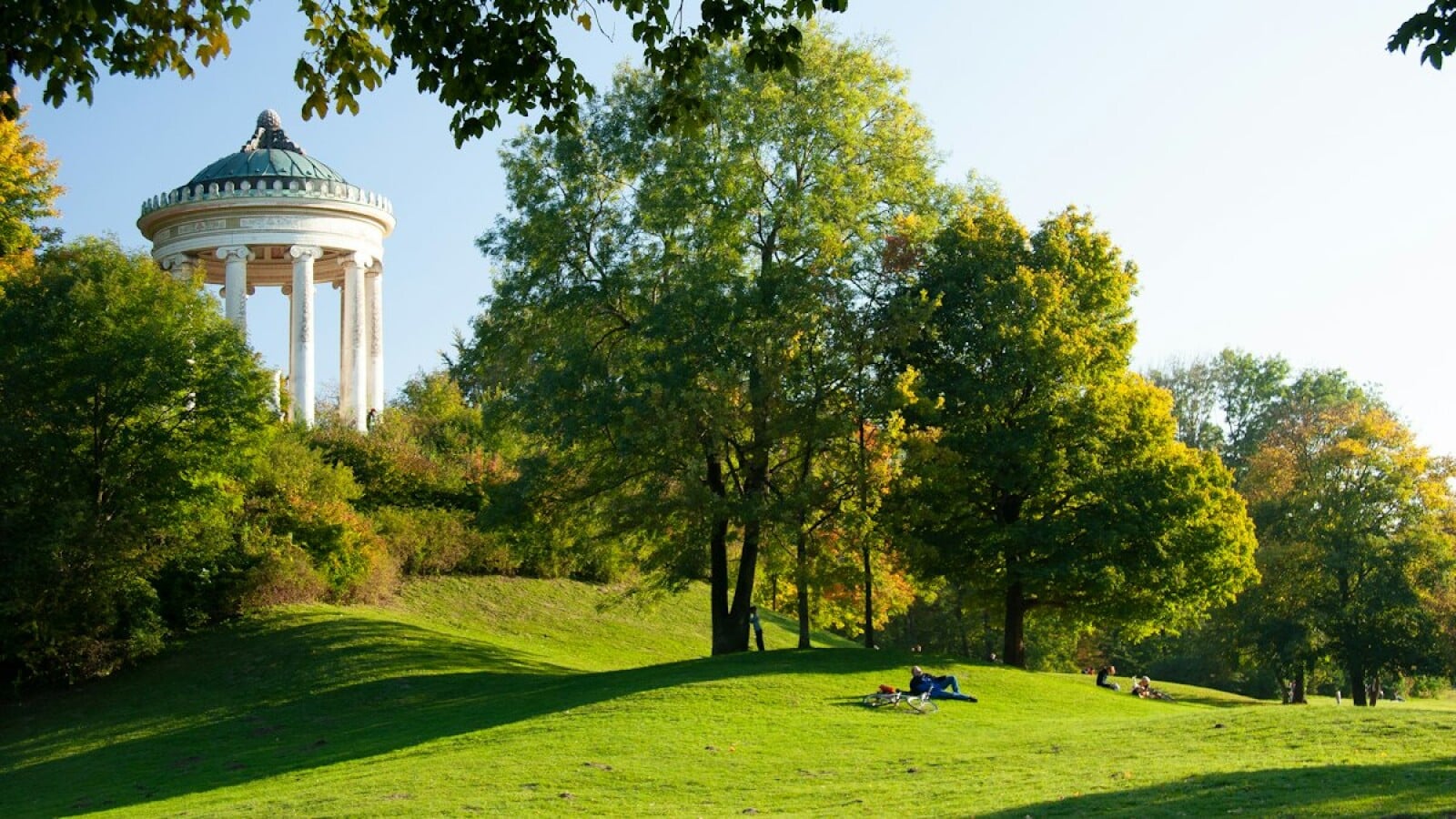
Munich suits families who want green space and good public transport, with the English Garden and the Isar inside the city and the lakes a short S-Bahn ride away. The trade-off is cost: the 2025 Mietspiegel puts the average net cold rent at €15.38 per square metre, and a full early years day at an international school costs about €18,000 a year in 2026-27.
Do children have to go to Kita in Bavaria?
No. Kita is voluntary, and school becomes compulsory for children who turn six by 30 June. The exception concerns German: if the language assessment before school shows a child's German will not be enough, the local primary school can require attendance at a state-funded Kita with an integrated German pre-course for more than three hours a day in the final year.
When should we apply to international schools in Munich?
Apply as soon as the move looks likely, because a place depends on space in the grade you need. Joining late still costs most of the year: Munich International School charges 95% of tuition for an October start and 65% for January. Budget for the application fee too, €200 at BIS and €343 at MIS for 2026-27.