Moving to Riyadh with family: schools, compounds and costs
Quick answer: what do you need to know about moving to Riyadh with family? Line up the school place and the iqama for each dependant first, then choose housing near the campus. International school tuition for 2026-27 runs from about SAR 28,000 a year at OWIS Al Jazeera to SAR 120,757 with VAT at AIS-R for high school. Schools set their own calendars, starting in August or early September.
Last reviewed: November 2026 by David from ISA. Fee ranges are indicative; always confirm with the school.
Key takeaways
- SEK International School Riyadh lists 2026-27 tuition from SAR 31,500 (Nursery) to SAR 73,500 (Grades 11 and 12), with 15% VAT added for non-Saudi families.
- One World International School's Al Muruj campus charges SAR 50,500 for Grade 1 in 2026-27 and SAR 7,500 a year for the bus, in fees it says are approved by the Ministry of Education.
- The Royal Commission for Riyadh City lets schools in its attraction programme set their own calendars, provided national holidays are observed.
- Saudi Arabia has charged a monthly fee for each dependant of a private-sector expatriate since 1 July 2017 (Saudi Press Agency).
Moving to Riyadh with family is now a common step for professionals joining regional headquarters, giga-projects and government advisory roles, and schooling has changed to match. Since 2021 the Royal Commission for Riyadh City (RCRC) has drawn British, Spanish, Singaporean and Australian schools to the capital through its International Schools Attraction Program, so families have more choice than a decade ago, but popular year groups still fill early.
This guide follows the order that works on the ground: school and residency paperwork first, then housing within a sensible commute, then a realistic first-year budget.
Riyadh for families: distances, transport and districts
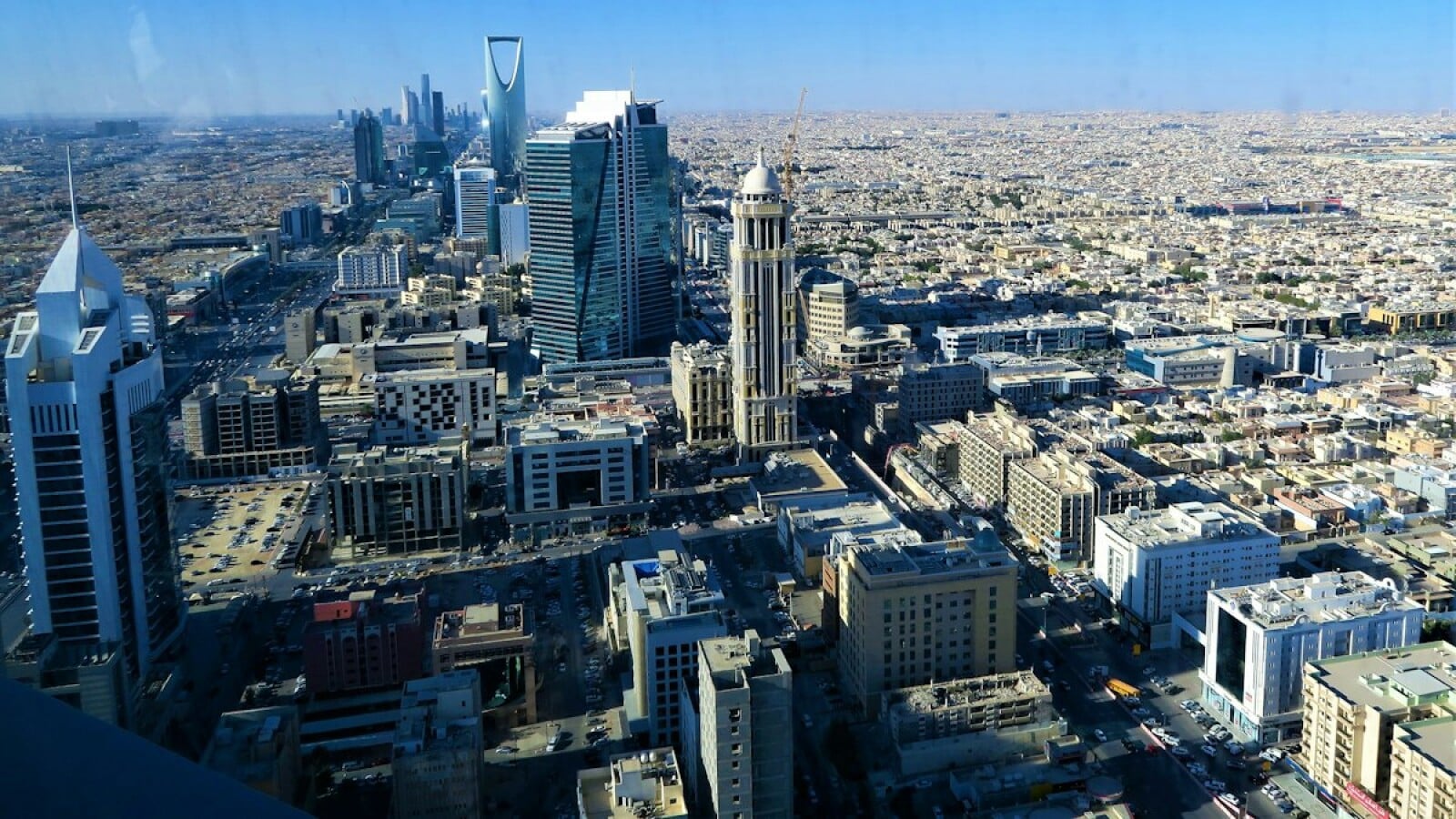
Riyadh is a car city spread over a vast area, and the school run shapes daily life more than anything else. The Riyadh Metro, inaugurated on 27 November 2024, has six lines, 85 stations and 176 km of track according to the RCRC, linking the airport, the King Abdullah Financial District and the Olaya corridor. It helps commuting adults; younger children still travel by school bus or car.
International schools are concentrated in the north and north-west. OWIS sits in Al Muruj off Olaya Street, SEK in Al Rabie near the King Salman and King Fahd highways, and the American International School-Riyadh (AIS-R) in Al Aarid. Choosing a home within a short drive of the campus, or on a school bus route, saves hours each week.
Which neighbourhoods and compounds suit families?
Most expatriate families choose between a gated compound and an apartment or villa in a residential district. Compounds bundle security, pools, gyms and often shuttle buses, which suits families with younger children and one car; districts give more space and choice but leave transport to you.
The Diplomatic Quarter (DQ) is the best-known option in the west of the city. The RCRC describes it as a planned district of about 8 km2 that hosts embassies and international organisations, with roughly 30% of its land given to parks, gardens and plazas and 16 neighbourhood parks. It also houses the King Faisal School complex, and a Riyadh Bus route has linked the DQ to the citywide network since March 2025. The trade-off is distance: from the DQ, schools in the north mean a longer daily drive.
For north-side schools, families often look at compounds and districts close to Al Muruj, Al Rabie or Al Aarid. Before signing a lease, check whether the compound or building is on your school's bus route and how long the run takes at 6.30 in the morning.
Curricula and how international schools are licensed
- American: AIS-R, and OWIS, whose programme the RCRC says is aligned with Common Core and the Next Generation Science Standards.
- International Baccalaureate: SEK Riyadh, an authorised IB World School for the Primary Years Programme; AIS-R offers IB Diploma courses.
- British: King's College, Aldenham, Downe House and Reigate Grammar have Riyadh campuses under the RCRC programme.
- Australian early years: The Wishing Tree, which opened in 2026 for children from six weeks to five years.
International schools need a Ministry of Education licence to operate, and both OWIS and SEK state that their fee schedules are approved by the Ministry. The RCRC lists the incentives given to schools in its programme, including co-education up to Grade 6 and freedom to set their own academic calendar.
Can Saudi children attend international schools? Yes. The RCRC says the schools it attracted offer thousands of seats for Saudi and non-Saudi students, and AIS-R and SEK publish separate fee lines for Saudi nationals, who do not pay VAT on tuition. OWIS adds Arabic and Islamic studies for Muslim pupils from Grade 1, in line with Ministry rules.
Schools to shortlist
One World International School (OWIS)
Part of the Singapore-based Global Schools Foundation, OWIS opened in Riyadh in 2022, according to the RCRC. The Al Muruj campus teaches from Pre-KG to Grade 10 in 2026-27, from SAR 38,600 for Pre-KG to SAR 64,300 for Grades 9 and 10, plus a technology fee of about SAR 2,500 and books priced by grade. A second campus, OWIS Al Jazeera, covers early years and elementary for SAR 27,800 to SAR 42,200. Its school week runs Sunday to Thursday, with an early finish on Thursdays.
SEK International School Riyadh
The Spanish SEK group opened its Riyadh campus in 2021 on Al Toq Street in Al Rabie. Its 2026-27 fees policy, which it says the Ministry approved, lists tuition from SAR 31,500 for Nursery to SAR 73,500 for Grades 11 and 12, paid in three instalments from September 2026. A reservation fee of SAR 9,000 (SAR 10,350 with VAT for non-Saudis) secures a place and is deducted from the first payment. SEK states that it charges no capital or development levy.
American International School-Riyadh
AIS-R is the most expensive of the three. For 2026-27, a non-Saudi family pays SAR 120,756.90 for Grades 9 to 12 including 15% VAT, against SAR 105,006 for Saudi nationals. New families also pay an application fee of SAR 5,026.65, a capital fee of SAR 26,389.05 for Grades 9 to 12 and a registration fee of SAR 16,963.65. Classes started on 19 August 2026, and the seat deposit for 2026-27 was due by 9 April 2026.
How much does moving to Riyadh with a family cost for schooling?
Tuition is the largest predictable cost, and the spread between schools is wide. The table compares 2026-27 tuition as published by each school.
| School | District | Curriculum | 2026-27 tuition per year |
|---|---|---|---|
| OWIS Al Jazeera | Al Jazeera | American | SAR 27,800 to 42,200 (Pre-KG to Grade 5) |
| OWIS Al Muruj | Al Muruj | American with IB PYP | SAR 38,600 to 64,300 (Pre-KG to Grade 10) |
| SEK Riyadh | Al Rabie | IB | SAR 31,500 to 73,500 (Nursery to Grade 12), before VAT |
| AIS-R | Al Aarid | American, IB courses | SAR 64,743.85 to 120,756.90, with VAT |
Sources: OWIS fee pages for Al Muruj and Al Jazeera, SEK Riyadh fees policy 2026-2027 and AIS-R tuition and fees for 2026-2027 new families.
- VAT: 15% on tuition for non-Saudi pupils at SEK and AIS-R; Saudi nationals are exempt.
- Entry fees: OWIS application SAR 500 and registration SAR 3,000 (adjustable against fees); SEK assessment SAR 250.
- Transport: SAR 7,500 a year for the two-way OWIS bus.
- Language support: SEK charges SAR 5,000 per period for English language support when required.
- Exams: AIS-R bills IB courses at 92 euros each; SEK bills DP exam fees in Grade 12.
Worked example: a Grade 1 child at OWIS Al Muruj costs SAR 50,500 in tuition plus SAR 7,500 for the bus, SAR 2,500 for technology and SAR 750 for uniform, about SAR 61,250 before books and the one-off entry fees.
What visas and residency do family members need?
Dependants normally enter on a family visa sponsored by the working parent and then receive their own iqama (residence permit). Saudi Arabia has charged a monthly fee for each dependant of an expatriate in the private sector since 1 July 2017, paid in advance, according to the Saudi Press Agency. Ask your employer to confirm the current monthly rate and who pays it before you sign, because for a family of four it is a significant yearly sum. The Ministry of Human Resources and Social Development's 2024 directory of services for expatriates also lists an iqama renewal fee of SAR 500 for a resident family member aged 18 or over.
Premium Residency is a separate route that does not depend on an employer sponsor. The products, conditions and fees are set by the Premium Residency Center and change from time to time, so check the current list before counting on it.
Practical advice for the first months
Apply to schools before you sign a lease. Entry assessments, seat deposits and waiting lists set the timetable; once you have an offer, look for housing on that school's bus routes.
Plan around the calendar. Schools set their own term dates but close for national holidays such as Saudi National Day on 23 September and Founding Day on 22 February. Most start in August or early September, so a summer move works best.
Bring certified documents. Keep attested birth certificates, previous school reports and vaccination records ready: schools and residency services both ask for them.
For a closer look at fees, see our guide to international school fees in Riyadh, and compare the Gulf alternative in our guide to moving to Dubai with kids.
Compare schools in Riyadh
To see how these schools sit alongside British, Indian and bilingual options across the city, use our ranking of the best schools in Riyadh.
More guides to schools in Riyadh
- International school fees in Riyadh
- How to choose an international school in Riyadh
- International school admissions in Riyadh
- Bilingual schools in Riyadh
- Best international schools in Riyadh
- ranking of the best schools in Riyadh
Frequently asked questions
Is Riyadh a good place to live with children?
Many expatriate families find it workable once school and housing are close together. The Royal Commission for Riyadh City has brought in schools from the UK, Spain, Singapore and Australia since 2021, and the Diplomatic Quarter gives about 30% of its land to parks. Long drives and summer heat are the main drawbacks, so a short school run matters.
Where do expat families live in Riyadh?
Families tend to choose either a gated compound with shared facilities and shuttle buses, or a villa or apartment in a northern district near their school, such as Al Muruj, Al Rabie or Al Aarid. The Diplomatic Quarter in the west is the planned option, home to embassies, parks and a Riyadh Bus link since March 2025.
Can my children start school in Riyadh mid-year?
Often yes, if a seat is free in their year group. SEK Riyadh charges the full term fee for a pupil who joins late in a term, and AIS-R sets tuition by quarter of entry, for example 65% of the first semester for pupils joining between 11 April and 15 June 2027. Ask early, because popular grades fill quickly.