
Best International Schools in Guayaquil: 2026 Guide for Families
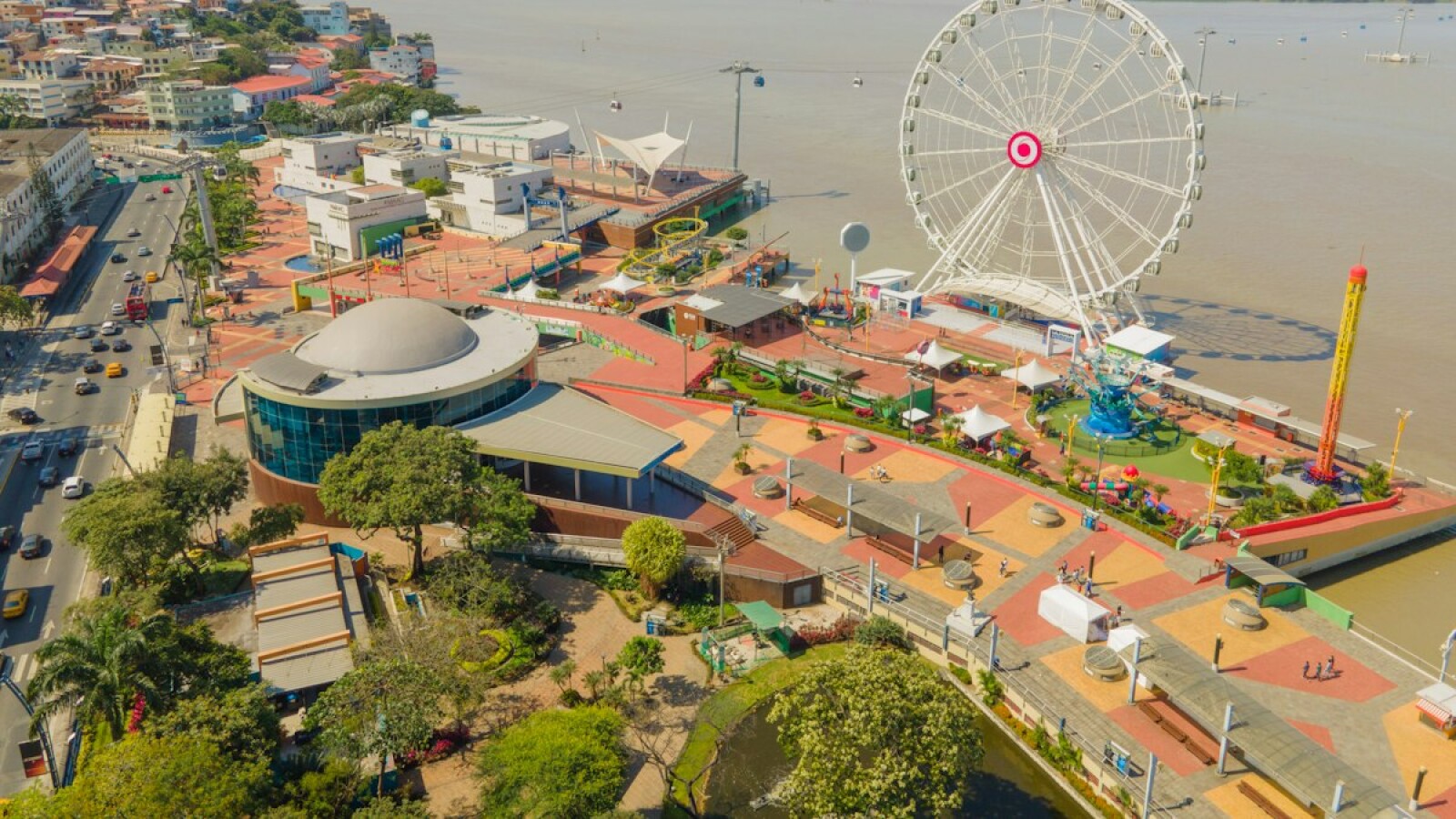
Quick answer: Which are the best international schools in Guayaquil? Three schools with profiles in our directory fit different families: Liceo Panamericano Centenario for a bilingual IB Continuum route in the south, Internacional SEK Guayaquil for IB plus Spanish curriculum on the Vía a la Costa, and Academia Naval Almirante Illingworth for a disciplined national programme with an IB track.
Last reviewed: October 2026 by David from ISA. Fee ranges are indicative; always confirm with the school.
Choosing among the best international schools in Guayaquil is less about league tables than about three practical questions: which curriculum your child will need when you move on, how far the school is from where you will live, and how much of the day is taught in English. Guayaquil is Ecuador's main port and a major commercial city, and the international school sector is smaller than in Quito. A John Catt yearbook of IB schools notes that Ecuador's international schools cluster around Quito and Guayaquil, which tells you the choice here is real but limited.
We should be clear about scope. Only three Guayaquil schools have a profile in our directory: Liceo Panamericano Centenario, Academia Naval Almirante Illingworth and Internacional SEK Guayaquil. This is not a full survey of the city. Rather than crown a winner, the sections below explain who each school suits, using each school's own website and public Ministry of Education reporting, and flag what you still need to ask.
Guayaquil context: geography, commutes and the school calendar
Guayaquil sits on the Guayas river, and where you live decides where you school. Liceo Panamericano Centenario is in the Barrio del Centenario, in south-central Guayaquil. Internacional SEK Guayaquil is on the Vía a la Costa, the western road toward the coast. Academia Naval Almirante Illingworth is on the road to Daule, at kilometre 8.5, and it has opened a newer campus further out near Daule for younger pupils. Traffic at drop-off hours is the factor most families underestimate, so the commute test below matters as much as the curriculum.
The calendar is the other local surprise. Ecuador runs two regimes. According to Primicias, reporting the Ministry of Education, Culture and Sports timetable, the 2026-2027 school year in the Costa-Galápagos regime began on a staggered basis from Monday 4 May 2026, with some private institutions returning earlier, on 13 April 2026, and private, fiscomisional and municipal schools setting their own start dates. Primicias adds that schools must complete 200 working days. The Sierra regime, which covers Quito, starts in September. If you arrive from the northern hemisphere or move between Quito and Guayaquil, expect to land mid-year in one of the two systems. Liceo Panamericano Centenario publishes a calendar with three terms, running roughly April to July, August to November and January to February, with year groups entering on different days between mid-April and 4 May in 2026.
Curricula available in Guayaquil
- Ecuadorian national curriculum: all three schools deliver it, and the national bachillerato is what keeps a child eligible for Ecuadorian universities.
- International Baccalaureate: Liceo Panamericano Centenario describes itself as an IB Continuum school (Primary Years, Middle Years and Diploma). Internacional SEK Guayaquil says it is an IB World School teaching the Primary Years Programme and the Diploma. Academia Naval Almirante Illingworth offers an IB track, which the school calls Bachillerato Internacional.
- Cambridge English pathways: Liceo Panamericano Centenario prepares pupils for Starters, Movers and Flyers in primary and for A2, B1 and B2 exams later. SEK Guayaquil says pupils prepare for a first Cambridge certification from fourth year of basic education.
- Spanish curriculum alongside IB: SEK Guayaquil says it integrates the Spanish curriculum with the IB framework.
- Third language: French is taught at Liceo Panamericano Centenario in the upper years and in primary at SEK Guayaquil, according to each school.
We could not open the International Baccalaureate Organization's school directory from our research tools, so IB status above is as stated by each school. Ask for the current authorisation letter if it matters for your plans.
The schools: who each one fits
Liceo Panamericano Centenario
This is a private, Christian-Catholic, coeducational school that takes children from age 2 up to the end of bachillerato at around 17. It describes itself as bilingual from the early years to the IB, and is part of International Schools Partnership. The IB Primary Years Programme runs from the early years to seventh year of basic education, followed by the Middle Years Programme and the Diploma. The school says its first IB Diploma cohort has graduated and, according to its website, all of them were admitted to one of their top three university choices. We read that as the school's claim, not an independent result. Admissions are open all year depending on places, there is no charge for the admissions process, and children must reach the entry age by 25 August. Tip: ask how the school handles children who arrive mid-year with little English, since a language assessment is part of admission. It suits families who want an early-years start, an English-heavy timetable and a Cambridge exam path.
Internacional SEK Guayaquil
SEK Guayaquil opened in 1986, according to the history page of the Institución Internacional SEK, the Spanish-founded group it belongs to, a network with schools in several countries. The school teaches from Maternal at age 2 and, according to its FAQ, mainly in Spanish and English, with a school day from 08:00 to 16:00. It describes the Primary Years Programme for ages 3 to 11 and the Diploma in the last two years of bachillerato. Services include a canteen with its own kitchen and a school doctor, and transport is contracted directly by parents from an external company that the school says it checks. Tip: because the day is long, ask about homework and after-school clubs for younger children. It suits families who want a large network with sister schools in several countries and IB continuity at the end.
Academia Naval Almirante Illingworth
ANAI is a private school with more than 60 years of history, organised into separate boys' and girls' sections plus a mixed afternoon section, with a naval-style discipline. It teaches from early years to the national bachillerato, offers an IB track and an online modality, and says classes in the early years are between 20 and 25 children. English is taught through communicative methods, but ANAI does not describe itself as bilingual the way the other two do, so check how many weekly hours of English your child would receive. Bachillerato days for the morning boys' section run from 06:45 to 12:30, according to the school. The admissions steps on its website include a registration fee, copies of school records, psychological and pedagogical tests and a medical check. Tip: if your child has no Spanish, ask whether the afternoon mixed section offers any English support. It suits families who value structure, a single-sex classroom and a Spanish-medium route with an IB option, but less so families who need an English-first environment.
Fees and what to budget
None of the three schools publishes a full tuition table on the pages we read, so we will not invent ranges. What is public is the framework. Ecuador's Ministry of Education sets the maximum monthly fee and enrolment fee for each private school each year, and it opened an online tool where parents can look up the maximum approved amounts by province and canton, as El Mercurio and Primicias reported in August 2026. The ministry rules mean a school cannot raise a fee during the year, and it caps combined spending on uniforms, supplies, textbooks and digital platforms at the amount of one month's "fourteenth salary", which Primicias puts at USD 486 for 2026; El Mercurio ran a headline giving USD 482, so confirm the current figure with the Ministry. For the Sierra regime, the base increase for 2026-2027 was 2.22 percent, and schools could apply for more with justification. Costa schools follow their own cycle, so check the tool for the figure that applies in Guayaquil.
Fees are in US dollars, so there is no currency risk for a family paid in dollars. The only school-published figure we found is on ANAI's new Daule campus page: its monthly fee for 2027-2028 was not yet approved by the Ministry but, according to the school, would not exceed USD 300. For Liceo Panamericano Centenario, an online fee calculator exists on its calendar page but returned no result when we tried it. Extras to ask about at any school:
- Admission or registration fee: free at Liceo Panamericano Centenario; ANAI lists a registration fee.
- Enrolment (matrícula) and monthly fee: request the Ministry-approved amounts for your child's year.
- Medical insurance: ANAI's steps mention a medical insurance charge at enrolment.
- Transport: Liceo Panamericano Centenario uses a contractor with satellite tracking; ANAI lists school buses; SEK parents contract directly.
- Meals and after-school care: Liceo Panamericano Centenario has a daycare and homework club; SEK has a canteen.
- Uniforms, supplies and textbooks: capped by the Ministry rule above.
- Exams: Cambridge and IB Diploma entries are normally billed separately; ask for the current amounts.
Liceo Panamericano Centenario lists discounts for prompt payment: 4 percent for paying in the first five days of the month, and, for payment within the first ten days, 20 percent for former pupils, 10 percent for company agreements and, for siblings, 4 percent for the first child, 9 percent for a second and 14 percent for a third. Ask the school whether these discounts combine.
Practical advice for choosing
Match the school to your exit plan. If you are likely to move again within three years, the IB Diploma and Cambridge exams travel best, and SEK Guayaquil and Liceo Panamericano Centenario are built around them. If you plan to stay, ANAI's national bachillerato may be enough for local universities. Ask each school where its recent graduates went, and treat any percentage in a brochure as the school's own figure.
Test the commute before you apply. Drive the route at 06:30 and again at the afternoon pick-up, then compare with the school's transport options. A school on the Vía a la Costa and one on the Daule road serve very different neighbourhoods.
Plan around the calendar. Because Costa schools set their own dates inside the Ministry's framework, a move in October or November lands you late in term two. Liceo Panamericano Centenario accepts applications all year, but only if a place is free, so book a visit before you move and confirm the entry age rule, which uses 25 August as the cut-off there.
Compare more schools
To see how these schools compare with others in the province, read Best international schools in Guayas and ask each school for its approved fees.
More guides to schools in Guayaquil
- How to choose an international school in Guayaquil
- Bilingual schools in Guayaquil
- International school fees in Guayaquil
- International school admissions in Guayaquil
- Best international schools in Guayas
Frequently asked questions
When does the school year start in Guayaquil?
Guayaquil follows the Costa-Galápagos regime. According to Primicias, reporting the Ministry of Education, the 2026-2027 year began on a staggered schedule from 4 May 2026, with some private schools starting on 13 April. Private schools set their own dates, so confirm with each one. The Sierra regime starts in September.
Do international schools in Guayaquil offer the IB?
Yes. Liceo Panamericano Centenario describes an IB Continuum with the Primary Years, Middle Years and Diploma programmes. Internacional SEK Guayaquil describes the Primary Years Programme and the Diploma. Academia Naval Almirante Illingworth offers an IB track. IB status is as stated by each school, so ask for current authorisation.
Who sets private school fees in Ecuador?
Ecuador's Ministry of Education sets the maximum enrolment and monthly fees for private and fiscomisional schools and runs an online tool to check them. Fees cannot rise during the school year. Primicias also reported that spending on uniforms, supplies and textbooks should not exceed one fourteenth salary, given as USD 486 in 2026 (another outlet reported USD 482).


