Bilingual Schools in Guayaquil: A 2026 Guide for Families
Quick answer: Which are the best bilingual schools in Guayaquil? Our directory lists three in the city: Liceo Panamericano Centenario, an IB school with English used for teaching from primary; Internacional SEK Guayaquil, on the Vía a la Costa; and Academia Naval Almirante Illingworth, a naval-style school with an IB track. Fees are mostly unpublished, so ask each school directly.
Last reviewed: October 2026 by David from ISA. Fee ranges are indicative; always confirm with the school.
Families searching for bilingual schools in Guayaquil quickly find that the word covers very different things. Some schools teach several subjects in English every day. Others offer strong English as a subject inside a Spanish-language curriculum. A few have an International Baccalaureate (IB) track that leads to university abroad. This guide separates the three and explains how to tell them apart on a visit.
Our directory has only three schools in Guayaquil itself, and we would rather say so than pad the list. The city has other schools with international programmes, and the IB's own school directory names a few of them, but they are not in our directory, so we do not profile them here. What follows is a closer look at the three we do list, plus the questions that matter most when you compare any bilingual option in the city.
Guayaquil context: where schools sit and how families get to them
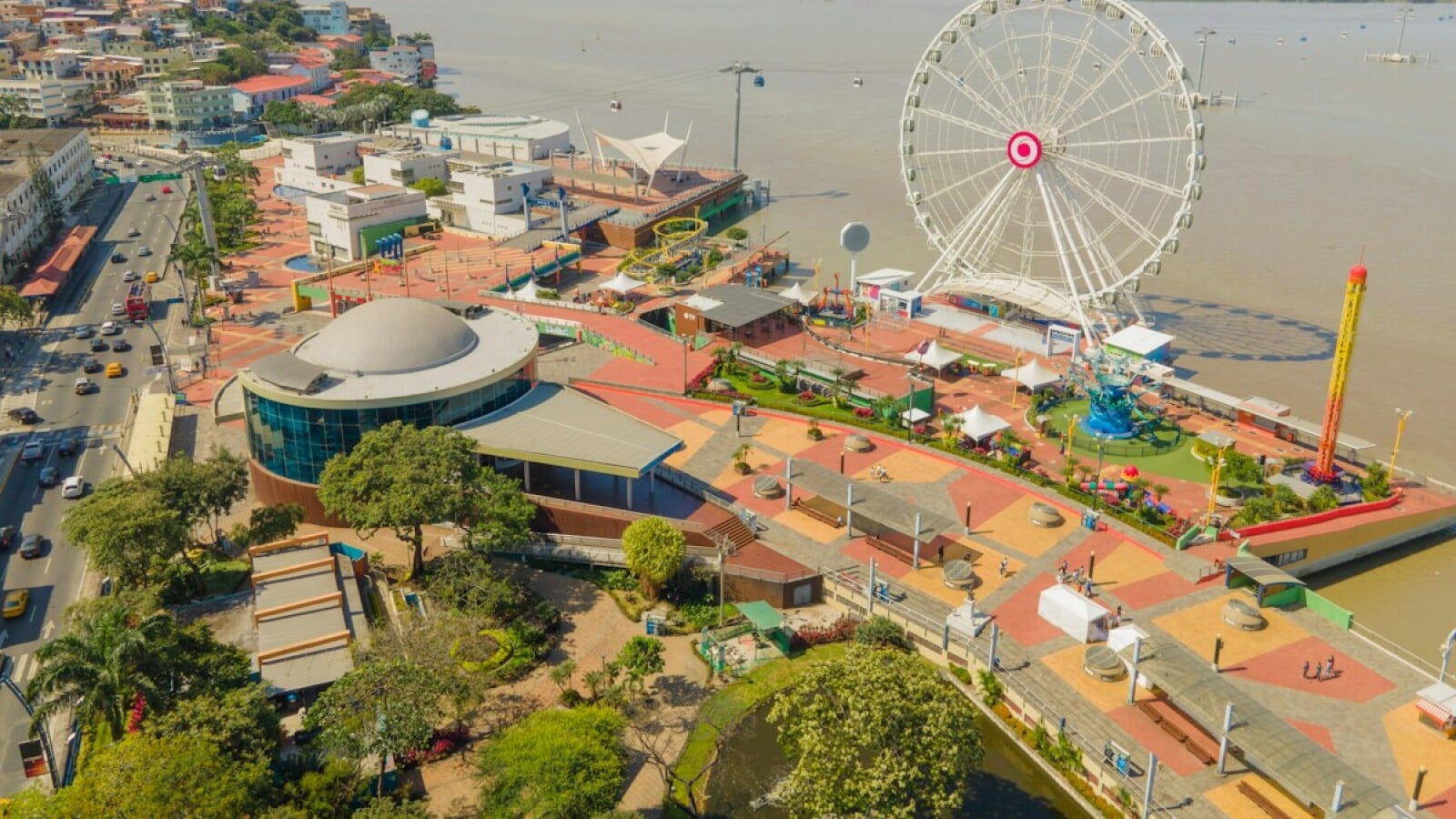
Guayaquil is Ecuador's largest city and its main port, on the Guayas river, with a hot, humid climate and a rainy season that runs roughly from January to April. Expat and returning-Ecuadorian families tend to live in one of three places: the older residential districts of the city itself, the towns across the river in Samborondón, or the western suburbs along the Vía a la Costa. Schools follow those patterns, and the choice of home usually decides which schools are realistic.
The commute is the practical constraint. The three schools we list are spread across the city: Liceo Panamericano Centenario sits in the Barrio del Centenario in the south-centre, Academia Naval Almirante Illingworth is at kilometre 8.5 on the Vía a Daule to the north-west, and Internacional SEK Guayaquil is on the Vía a la Costa to the west. Morning traffic on the main roads can make a short distance on the map a long ride, so it is worth doing the school run once, at the real time, before you commit. Several schools run their own bus routes; ANAI publishes transport by zone on its website, and it lists a dedicated route for its IB programme.
Calendar matters too. Guayaquil follows the Costa-Galápagos school year set by the Ministry of Education, which is not the same as the Sierra year used in Quito. According to the calendar reported by the Ecuadorian newspaper Expreso, the current Costa year started on 4 May 2026 for bachillerato and early-years pupils (other levels joined on staggered days from 5 May), has a winter break from 26 December to 3 January, and closes with supplementary exams in early March 2027. If you are arriving from a September-to-June system, expect to join a year that is already well under way, and ask each school how it handles mid-year entry.
What "bilingual" means in Guayaquil
There are three broad models, and the label on the gate rarely tells you which one you are looking at.
Bilingual schools with an IB framework: Spanish and English are both used to teach, often alongside a third language, and the IB programmes give a structure families abroad recognise. Liceo Panamericano Centenario is the clearest example in our directory.
Schools with an international track: the main programme follows the Ecuadorian national curriculum in Spanish, with an IB or English-intensive stream for part of the school. Academia Naval Almirante Illingworth fits here.
International network schools: part of a multi-country group whose own programmes are international from the early years. Internacional SEK Guayaquil belongs to the SEK Education Group.
Ecuadorian private schools generally teach in Spanish, and the national bachillerato is a Spanish-language qualification. That is why the IB matters for families: the IB Diploma is taught and examined in English and Spanish at the schools that offer it, and it is the route most schools use to prepare pupils for study outside Ecuador.
The schools
Liceo Panamericano Centenario
Liceo Panamericano Centenario (LPC) is a private, co-educational, Catholic-values school that describes itself as fully bilingual. The school says it was founded in 1969 and became fully bilingual in 2001, though we could not confirm those dates on its website, and it belongs to International Schools Partnership. The IB's school page for LPC shows authorisation dates of 9 March 2020, 26 January 2023 and 5 March 2024, with English and Spanish as the languages of instruction; the 2024 entry lists Diploma-style subjects such as Theory of Knowledge.
According to the school, the Primary Years Programme runs from Pre-Kinder to seventh básica, then the MYP and the Diploma. English is introduced through songs and stories in early years and used academically across several subjects from primary. Pupils prepare for Cambridge English exams, from Starters, Movers and Flyers in primary to A2, B1 and B2 in secondary, with a stated aim of reaching at least B2 before leaving. French is added as a third language in upper years.
One thing to check: the Diploma is new here, so ask about the first cohorts' results rather than assuming a track record. The admissions policy is also more academic than many families expect. From second básica upwards the school's published policy includes mathematics, language, English and psychological tests, plus a minimum report-card average, and it says it gives preference to Centenario pupils who later move to its sister campus in Samborondón.
Internacional SEK Guayaquil
Internacional SEK Guayaquil is a secular, co-educational school on the Vía a la Costa. The school's website says it has been "forming global citizens" since 1986 and lists early years, primary, secondary and an IB Diploma stage. The IB's school directory lists a SEK school in Guayaquil authorised for the Primary Years Programme and the Diploma Programme, taught in Spanish and English.
SEK Education Group describes a network of 26 schools, two universities and one higher-studies centre across 17 countries. For a family that may move again, that matters: a network can make a transfer to another SEK school simpler, though you should confirm in writing how records and places are handled.
Public information on this school is thin. Its website does not set out the language split by year, and fees and admissions steps are not published online, so the visit is the real research. Ask which subjects are taught in English in each stage, who teaches them, and how many pupils sit the Diploma in a typical year.
Academia Naval Almirante Illingworth
Academia Naval Almirante Illingworth (ANAI) is a different kind of school from the other two, and it is worth treating it as such. It is a private school with a naval name and tradition, on the Vía a Daule, and its pupils are organised in separate boys' and girls' sections plus a mixed afternoon section. Its extracurricular list includes a Pelotón Comando, a Guardia de Honor, a Brigada Cívica and a Pelotón de Liras alongside football, basketball, swimming and chess. The school's website does not describe an official link with the Navy, so ask what the naval identity means in daily practice, in uniform and discipline.
The school says it has more than 60 years of experience and offers early years, general basic education and the national bachillerato, plus an International Baccalaureate track with its own coordinator and bus route, and an online option. Its website stresses discipline, leadership and international standards, and includes the IB's Theory of Knowledge course, but it does not set out an English programme, so treat it as a school with an international stream rather than a bilingual school in the strict sense.
It suits families who want structure and are comfortable with a Spanish-language base. It is less obviously suited to a child who needs English-medium teaching from the first day.
Fees and what to budget
None of the three schools publishes full fee tables online, and our directory lists no monthly figure for any of them. We would rather say that than quote a number we cannot support. Ask each school for the current fee schedule in writing, including every extra, and compare like for like.
For context, Ecuador uses the US dollar, so there is no currency risk for families paid in dollars. Reporting by the Ecuadorian outlet Primicias in August 2026, drawing on Ministry of Education data, put average bachillerato pensions at roughly USD 539 a month in Samborondón and USD 294 in Daule, with the most expensive schools in Samborondón reaching USD 1,200. Those figures cover all private schools in those areas, not bilingual schools specifically, so use them only as a rough ceiling and floor for the region.
The same coverage describes Ministry rules that limit increases: a school may request an investment-based rise no more often than every two years, capped at the Central Bank's education lending rate, which was 9.5% in August 2026, and an employment-based rise each year, capped at 2.553%. It also says uniforms, books and supplies should not cost more than the 14th-month salary, USD 486 in 2026. Check the school's own resolution if a bill looks high; parents can ask the Ministry for a school's approved costs.
Extras to ask about:
Enrolment (matrícula) and any registration or admission-test fee
Monthly pensión and the number of instalments
Uniforms, books and digital materials
School transport, charged by zone
IB or Cambridge examination fees
Meals, extracurricular clubs and trips
Practical advice for choosing
Ask what is taught in English, not how much English there is. A school can truthfully say it is bilingual while teaching English as one subject. Ask for a timetable for your child's year: which subjects are in English, how many hours, and whether the teacher is a native or a fluent non-native speaker. Then ask how pupils are placed if they arrive with little Spanish or little English.
Look at the exit, not just the entrance. If you may leave Ecuador, the IB Diploma or a recognised English test result will travel better than a national bachillerato. Both LPC and SEK are listed by the IB for the Diploma, and ANAI describes an IB track, so ask all three for recent results and where graduates went.
Visit at pick-up time and plan for the heat and the traffic. A fifteen-minute drive on paper can become far longer in the morning, and a bus ride in a hot city is tiring for a young child. If you are comparing a school in the city with one across the river, test both commutes in the same week.
Look beyond the three. Because our directory is small here, families will also hear about other bilingual and international schools in Guayaquil. Compare them with the same questions: language per subject, accreditations the school can evidence, fees in writing, and mid-year entry.
Compare more schools in Ecuador
For a wider view of the country, see our Best 10 International Schools in Ecuador | Ischooladvisor Ranking 2026.
More guides to schools in Guayaquil
Frequently asked questions
Are there truly bilingual schools in Guayaquil?
Yes, but they differ. Liceo Panamericano Centenario describes itself as fully bilingual and offers the IB from primary to Diploma. Others offer English as a strong subject or an IB track within a Spanish-language school. Ask for a timetable showing which subjects are taught in English in your child's year.
When does the school year start in Guayaquil?
Guayaquil follows the Costa-Galápagos calendar, which differs from Quito's. The current year began on 4 May 2026 for bachillerato and early years (other levels followed in stages), has a winter break from 26 December to 3 January, and ends with supplementary exams in early March 2027, according to reporting on the Ministry calendar.
How much do bilingual schools in Guayaquil cost?
The three schools in our directory do not publish fee tables, so ask for a written schedule. Ecuador uses the US dollar. Ministry data reported in August 2026 put average private bachillerato pensions at roughly USD 539 in Samborondón and USD 294 in Daule, a regional guide rather than a bilingual price.