
Bilingual Schools in Luxembourg: A 2026 Guide for Families
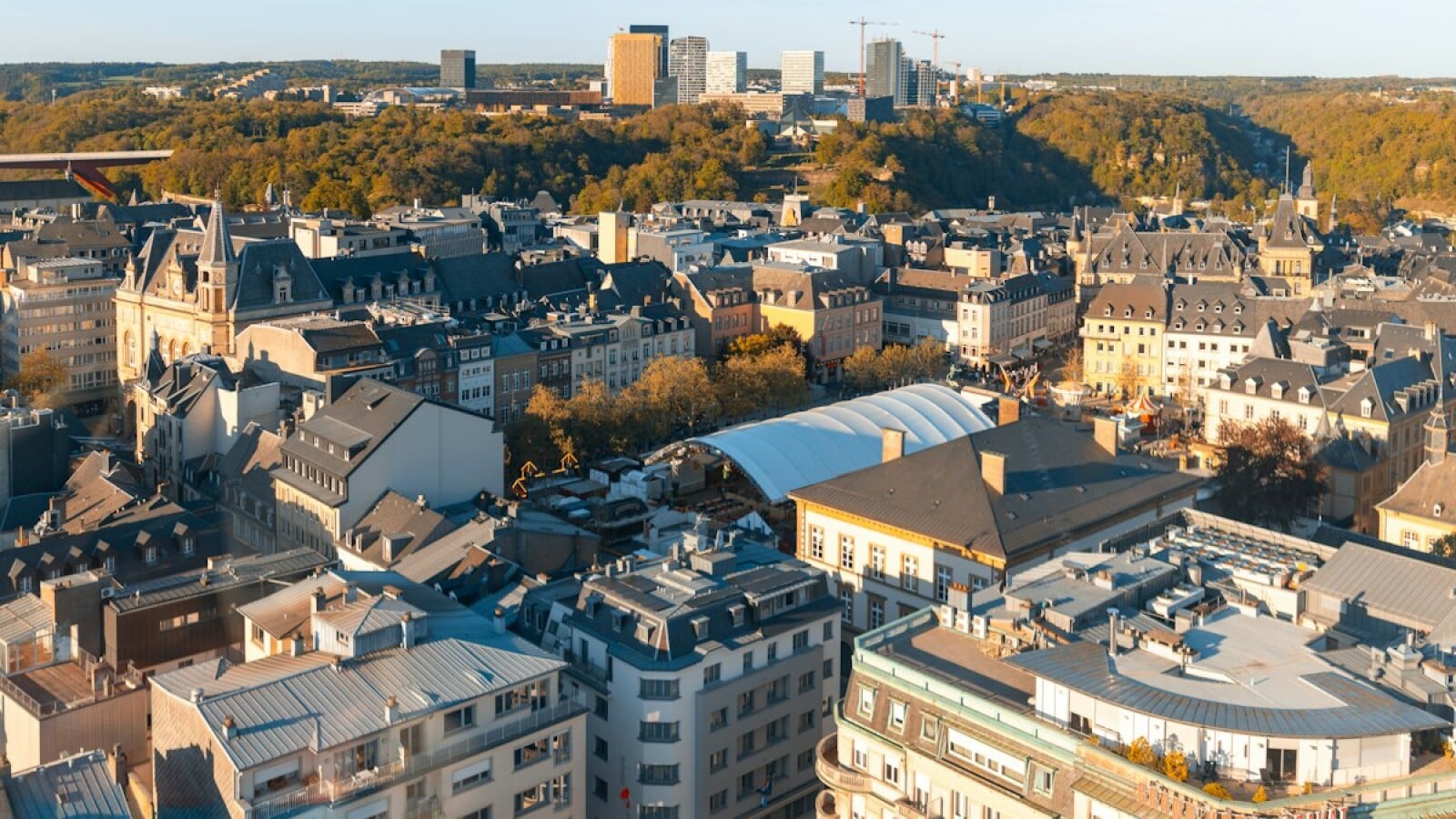
Quick answer: which are the best bilingual schools in Luxembourg? True bilingual teaching is mostly found in the public system and at OTR International School, which teaches Grades 1 to 5 half in French and half in English. English-medium schools such as St George's add French, Luxembourgish and German. Published 2026-27 fees run from roughly EUR 12,000 to EUR 19,700 a year.
Last reviewed: October 2026 by Catherine from ISA. Fee ranges are indicative; always confirm with the school.
Families searching for bilingual schools in Luxembourg quickly find that the word means three different things here. It can describe the public system, where children learn in several languages from the start. It can describe an international school that teaches in English and treats French as a serious second language. Or it can describe a school that divides lessons between two languages, which is rarer than the marketing suggests.
This guide explains each route, shows which schools fit which, and gives the published 2026-27 fees we could verify. Luxembourg is small, but it has a large expatriate community, so the choice is real: the right school depends on how long you plan to stay and which languages your child needs to keep.
What bilingual means in Luxembourg
Luxembourg's public primary school is multilingual by design. Luxembourgish, German and French all have a place in the public école fondamentale. The education ministry says that in the first cycle Luxembourgish is the main language of communication in class, and children are introduced to spoken French, with German and French reception courses for newcomers. For a child arriving at age 7 with no German or French, that is demanding.
The ministry has a system for newcomers. Newly arrived children aged 4 to 11 are registered through the education service of the commune where the family lives, and the school director places them in the cycle that matches their age. Children arriving between 6 and 11 join a regular class and also attend intensive reception courses in German and/or French. The ministry's service for the schooling of foreign children handles the support, and it also coordinates optional home-language courses: its current list covers 32 languages and more than 6,000 pupils. The ministry also notes that families can choose public international education instead.
So the realistic options are: the local system, a state-funded international stream, a private English-medium school with host-language teaching, a European School, or a genuinely two-language school. We cover examples of each below.
Where the schools are and how the day works
Luxembourg City is compact, and public transport is free for everyone, which the St George's website points out in its guidance to new families. The European School Luxembourg I is on Boulevard Konrad Adenauer in the Kirchberg area. St George's is at 11 rue des Peupliers, with public bus routes 15, 25 and 27 serving the Hamm area and the Cents-Hamm station nearby, according to the school's FAQ. Lycée Michel Lucius is on avenue Pasteur in Limpertsberg, and Athénée de Luxembourg is on Boulevard Pierre Dupong. OTR International School is at 7 rue Val Ste Croix.
Curricula available
- Luxembourgish national curriculum: public fondamental and secondary schools, where Luxembourgish, German and French are all used.
- English National Curriculum with IGCSE, A Level and BTEC: St George's International School.
- Cambridge Primary to A Level: Lycée Michel Lucius International School, according to its website, and OTR for AS and A Levels.
- International Baccalaureate: OTR (PYP, with a bilingual MYP option from 2026-27, according to the school) and Athénée de Luxembourg's Diploma classes.
- European School system: the European School Luxembourg, with teaching in language sections and the European Baccalaureate.
Bilingual and multilingual schools in Luxembourg
St George's International School, Luxembourg
St George's teaches the National Curriculum for England in English to more than 850 students aged 3 to 18, from 73 nationalities, according to the school. Secondary students work towards IGCSE, BTEC and A Level qualifications. It is English-medium, not bilingual, but its language provision is built around Luxembourg: French is taught from Nursery and grouped by ability from age 5, upper primary pupils add an hour of Luxembourgish a week, and German starts at age 11, as the school describes. For IGCSE, students can continue with French, German or both.
The school's website describes a new Immersive English Programme in Primary, to be introduced from 2027. It is aimed at children moving from beginner level in English (A1 or A2) to upper intermediate (B1 or B2), uses content and language integrated learning, and keeps Luxembourgish and French in the timetable, with French grouped by level. The stated onward pathways include returning to the local system. That makes it useful for families who may move from Luxembourg schooling to an English-language setting and back again. Primary classes average around 19 pupils, according to the school. St George's is inspected by the Independent Schools Inspectorate and accepts new students through the year up to Year 9, space permitting. Tip: children do not need English to join, but the school says some basic English is helpful from age 5.
OTR International School (Over the Rainbow)
OTR describes itself as a bilingual English and French school from preschool to the Diploma Programme. In primary, Grades 1 to 5 are taught 50% in French and 50% in English by co-teaching and language rotation, inside the IB Primary Years Programme. The school says its MYP gains a fully bilingual option from 2026-27 and the Diploma a bilingual option from 2027-28. OTR also describes itself as the only school in Luxembourg offering a complete bilingual IB pathway; the school itself notes that the pathway is still being rolled out, so treat it as a plan for the upper years. Cambridge AS and A Levels are also offered.
The school says it welcomes students from 47 countries and requires uniforms. Tip: ask which classes already have both language teachers present and which are still in transition, so you know what your child will receive in the year they join.
European School Luxembourg
The European Schools are a separate system for children of EU staff and others, with teaching in language sections and a European Baccalaureate. The Office of the Secretary-General says the schools provide multilingual and multicultural education at nursery, primary and secondary levels. Pupils are grouped in the language section of their main language and study a second language alongside it, according to the school's programme pages.
Admission depends on category. Category I pupils, mainly children of EU institution staff, must be admitted and pay no fees; Category III pupils are admitted if places are available, in a stated order of priority. Tip: if you are not an EU employee, apply in the March enrolment window, which ran from 2 to 27 March in 2026, and have a second option ready.
Lycée Michel Lucius International School
Lycée Michel Lucius is a state-funded secondary school that, the school says, created an English-language international stream in 2011 and later opened an international primary school. Its website lists Cambridge Primary, Cambridge Lower Secondary, IGCSE and Cambridge International AS and A Levels, and says children who turn 6 on 1 September join Year 1. It also runs the Luxembourgish secondary track, so both systems share one site. Tip: ask how much contact the international and local streams have, since that decides how much Luxembourgish your child picks up naturally.
Athénée de Luxembourg
Athénée de Luxembourg is a state secondary school. Its International Classes have taught entirely in English since September 2017, and the school says it has been an IB World School since 2010 and offers the Diploma Programme in the final two years. It suits older arrivals heading for the IB, not young children. Tip: confirm the intake years for the international classes, because the sequence of Grades 7 to 13 matters when you arrive mid-way.
Fees
Luxembourg fees are in euros, so families paid in euros have no exchange rate exposure. Published 2026-27 figures:
- St George's: tuition from EUR 13,050 (Nursery and Reception) to EUR 17,995 (Years 10 to 13), plus a EUR 1,500 building fund and EUR 200 stability fund, making EUR 14,750 to EUR 19,695 in total. The school says it estimates a state subsidy of about 30% of its operating budget in 2026.
- OTR: annual tuition EUR 12,280 (preschool), EUR 13,812 (Grades 1 to 5), EUR 15,519 (Grades 6 to 10) and EUR 16,492 (Grades 11 and 12), plus a non-refundable EUR 500 stability fund.
- European School: Category III pupils newly enrolled pay, for guidance, roughly EUR 4,460 (nursery), EUR 6,130 (primary) and EUR 8,360 (secondary) a year according to the Secretary-General's office; Category I pupils pay none.
- Lycée Michel Lucius and Athénée: we could not confirm a fee schedule, so ask whether any charges apply.
Extras at St George's include a EUR 750 non-refundable application fee, a EUR 1,000 refundable deposit, and extras such as the canteen and after-school activities. OTR charges EUR 300 registration and a EUR 450 refundable deposit. Both schools ask for notice before a child leaves: St George's says families who do not give written notice by the stated dates owe one third of annual tuition, so tell your employer about the clause.
Practical advice
Match the language plan to the length of stay. If you will stay for several years and want your child fluent in the local languages, the public system or a school with heavy host-language teaching suits you. If you might leave within two or three years, an English-medium school with French as a second language is easier to exit.
Test, do not assume. Ask any school to show a timetable with hours of each language, who teaches them and whether the teacher is a native speaker. Ask how a child at beginner level in French or English is supported, and what happens if they have not caught up after a year.
Apply early. European School enrolment follows a fixed window, and the private schools take applications through the year only where space remains. Contact two or three schools at the same time and visit before you decide. St George's lists open days on 13 November and 24 November 2026 and 27 February 2027.
Compare more schools
For a wider list, see our ranking: Best international schools in Luxembourg.
More guides to schools in Luxembourg
- Best international schools in Luxembourg
- International school admissions in Luxembourg
- How to choose an international school in Luxembourg
- International school fees in Luxembourg
- Best international schools in Luxembourg
Frequently asked questions
Is there a truly bilingual international school in Luxembourg?
OTR International School says it teaches Grades 1 to 5 half in French and half in English within the IB Primary Years Programme, using co-teaching and language rotation. It adds that a bilingual MYP option starts in 2026-27 and a bilingual Diploma in 2027-28. Ask which year groups already run the full bilingual model.
What languages are taught in Luxembourg public primary schools?
Luxembourgish, German and French all feature in the public primary school. The education ministry says Luxembourgish is the main classroom language in the first cycle, with spoken French introduced early. Newly arrived children are registered through their commune and placed by the school director, and those aged 6 to 11 can attend intensive German or French reception courses.
How much does an English-medium school in Luxembourg cost?
Published 2026-27 totals at St George's run from EUR 14,750 for Nursery and Reception to EUR 19,695 for Years 10 to 13, including building and stability funds. A EUR 750 application fee and EUR 1,000 refundable deposit apply on joining. OTR lists tuition of EUR 12,280 to EUR 16,492 depending on grade.