
Learning support in international schools: SEN and EAL
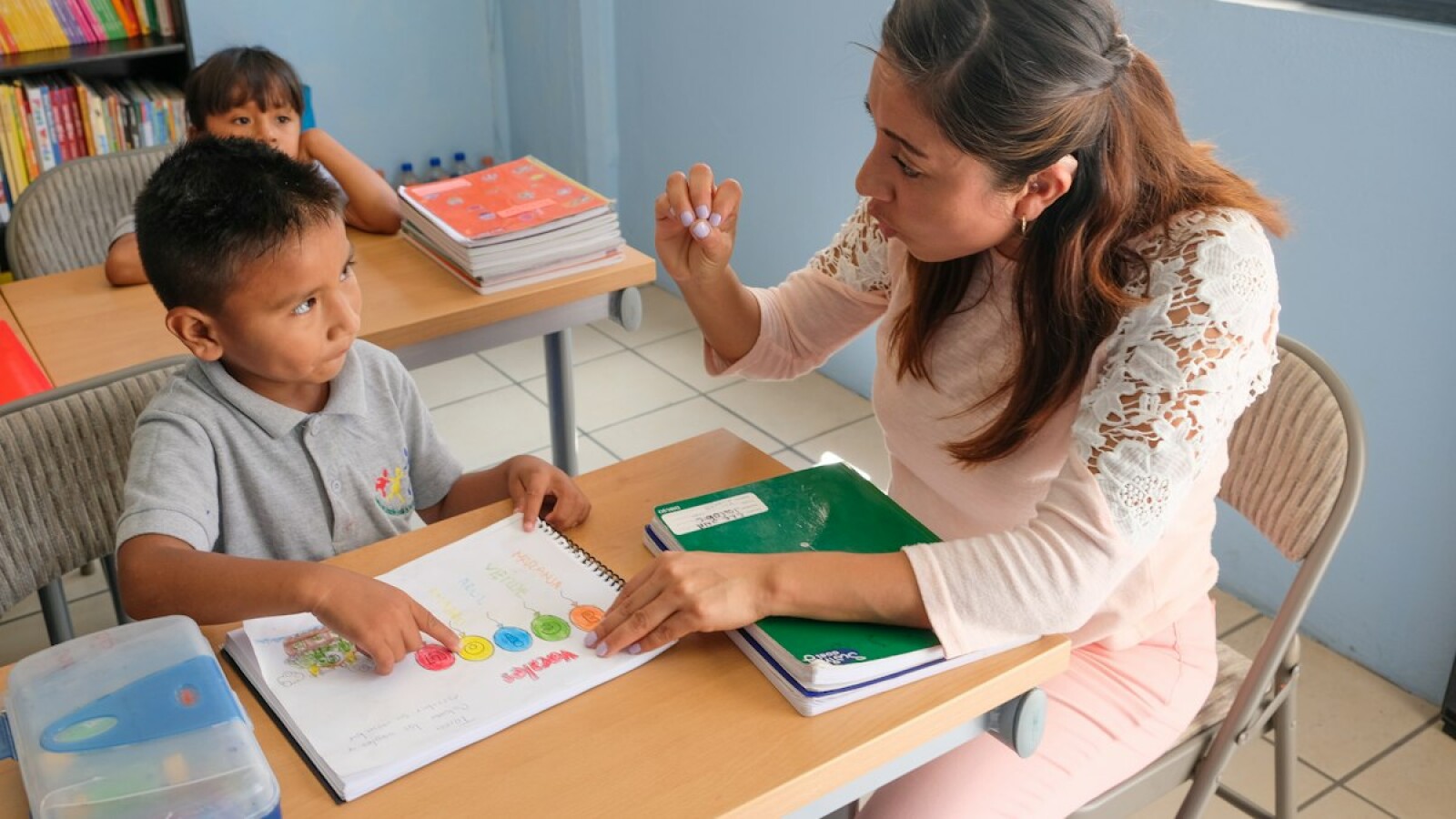
Quick answer: what is learning support in schools? It is the extra help a school gives pupils who need it: special educational needs (SEN) support, English as an additional language (EAL) and stretch for more able pupils. Some schools include it in fees, others charge: the International School of Lyon lists SEN support from EUR 900. The British School of Valencia has a specialist SEND team.
Last reviewed: November 2026 by Catherine from ISA. Fees are indicative; always confirm with the school.
Key takeaways
- Spain's education law (LOE, article 71, as amended by the LOMLOE in 2020) lists pupils who may need extra support, including special educational needs, a serious lack of the language of instruction and high intellectual ability.
- In the Valencian Community, Decreto 104/2018 of 27 July requires private schools without public funding to provide inclusive education too, while owners keep discretion over how they organise it.
- The International School of Lyon's 2026-27 terms charge EUR 650 per trimester for English support and EUR 900 to EUR 3,600 for SEN support, compulsory when the school decides it is needed.
- The British School group in Alzira, Xàtiva and Gandia includes its educational psychology department in the annual fee for 2026-27.
A school report that mentions "learning support", a SENCo or an EAL group can unsettle parents who grew up with a different system. If you are wondering what is learning support in schools, it is the set of adjustments, lessons and specialists a school uses so that every pupil can follow the curriculum, from a few weeks of English classes to a full individual plan.
International schools organise it very differently, and the gap shows up in admissions decisions and on the invoice. This guide explains the three strands, how needs are assessed, what is normally included and what is billed, what Spanish and Valencian law say, and what to ask a school in Valencia before you sign.
What is learning support in schools: SEN, EAL and the more able
Learning support covers three groups of pupils, and good schools keep the three apart so that a child learning English is not treated as a child with a learning difficulty.
- SEN (special educational needs): needs that affect learning, such as dyslexia, attention difficulties like ADHD, or problems with understanding, behaviour or physical ability, as the UK government's guidance describes them. British schools use the term SEND when disabilities are included and appoint a SENCo (special educational needs coordinator).
- EAL (English as an additional language): English lessons for pupils who are new to it, so that they can access the rest of the curriculum. Spanish law treats a serious lack of the language of instruction as a reason for specific support.
- More able pupils: extension for children working well above their year group. The LOE lists high intellectual ability among the needs that call for specific support.
How do schools assess a child's needs?
Most schools combine screening tests, teacher observation and parents' information, then place the pupil on a level of support. Cambridge House in Rocafort, near Valencia, describes a typical process: tests such as BADyG, CAT, PASS and NGRT, observations by the SENCo, a psychologist and support teachers, then an Individual Educational Plan (IEP) reviewed in the middle of each term.
Many schools work in three waves or tiers. At the International School of The Hague, Tier 1 is universal classroom support that around 80% of pupils fall within, while Tiers 2 and 3 bring more specialised and explicit teaching. Expect the school to ask for previous reports at admission: AIS Jakarta, part of the Australian Independent School in Indonesia, for example, requires an up-to-date psychologist or specialist report, translated into English if needed, before confirming a learning support place.
What is usually included, and when do schools charge extra?
Classroom adaptations are almost always part of tuition; intensive one-to-one support and English classes are where fees diverge. Official fee pages show both models:
- Included: the British School group in Alzira, Xàtiva and Gandia lists its Department of Educational Psychology among the items covered by the annual fee, and Cambridge House says its fees include psycho-pedagogical guidance and academic support staff.
- Charged separately: the International School of Lyon bills English support (ESOL) at EUR 650 per trimester from Grade 2 to Grade 10, compulsory until the required level is reached, and SEN support in four bands from EUR 900 to EUR 3,600 in 2026-27. AIS Jakarta charges regular tuition plus an additional support fee.
- Capacity limits: Cambridge House warns that there may be cases it cannot meet within normal school resources, and will then meet parents to discuss the best course of action.
For the wider picture of tuition, registration and extras, see our guide to international school fees in Valencia.
| Type of support | What it is | Who gives it | Example cost 2026-27 |
|---|---|---|---|
| Classroom adaptation (Tier or Wave 1) | Teaching adjusted for all pupils | Class teacher, advised by the SENCo | Included in tuition |
| In-class or small-group support (Wave 2) | Specialist help in class or withdrawal groups | Support teacher or SENCo | EUR 900 to 1,800 at ISL |
| Individual plan (Wave 3) | Formal diagnosis and an IEP | SENCo, specialist teachers | EUR 2,700 to 3,600 at ISL |
| EAL or ESOL classes | English lessons to access the curriculum | EAL teacher | EUR 650 a trimester at ISL |
| Psychology and speech therapy | Assessment, guidance, therapy | School psychologist, speech therapist | Included in the British School group's annual fee |
Costs from the International School of Lyon (ISL) 2026-27 terms and conditions and the British School group's 2026-27 fee page; wave descriptions from Cambridge House.
What do Spanish and Valencian law say?
Spanish law makes inclusion the rule. Article 71 of the LOE, as amended by the LOMLOE, obliges education authorities to provide resources for pupils with special educational needs, language disorders, attention or learning difficulties, a serious lack of the language of instruction, high ability or late entry into the system, among others. Article 74 adds that needs must be identified as early as possible by specialist professionals, and that parents must be heard and informed.
In the Valencian Community, Decreto 104/2018 of 27 July sets the principles of equity and inclusion for publicly funded schools, and its article 2 extends the duty to provide inclusive education to private schools without public funding. Orden 20/2019 of 30 April organises the support in publicly funded schools, and a regional instruction of 6 March 2024, issued for the 2023-24 school year, confirms that needs are recorded in an informe sociopsicopedagógico (a formal educational assessment) by the guidance services.
How do you get an assessment or diagnosis?
- Talk to the school first. The UK government advises parents who suspect SEN to contact the SENCo, and many schools in Valencia have their own psychologist.
- Ask for a school assessment in writing. The British School group says its psychology department carries out psychopedagogical assessments of cognitive and emotional needs.
- In a publicly funded school, the guidance services prepare the informe sociopsicopedagógico under Valencian rules.
- Keep every report and translate it. Schools abroad may ask for a certified English translation at admission.
Learning support in Valencia's international schools
The three schools below are British-curriculum schools in the province of Valencia, each with a published support structure.
British School of Valencia
The school says it has pastoral leads in every key stage, a specialist SEND team that provides support and adjustments, and an Inclusivity Champion on its safeguarding team. It expects an age-appropriate level of spoken and written English from Year 2, and C1 to C2 English for Year 12 and 13, so it suits children who already work in English rather than complete beginners. Monthly tuition for 2026-27 ranges from EUR 760 in the early years to EUR 995 in the sixth form, paid in ten instalments, plus a EUR 3,250 first registration fee.
British School Alzira
Open since 1997 and taking pupils from Pre-Nursery to Year 13, it caps each year group at two classes. Its group psychology department identifies specific needs, both difficulties and talents, and runs adapted intervention programmes; the annual fee (EUR 698 to EUR 837 in 2026-27, or EUR 1,405 for new Year 12 and 13 pupils) covers the department, on top of monthly tuition of EUR 570 to EUR 803.
British School Xàtiva
Founded in 2009, it is a single-form school, with one class per year group from Pre-Nursery to Year 13. The shared department that serves Xàtiva, Alzira and Gandia includes three psychologists, a speech therapist and an SEN coordinator, which matters for families who need speech and language work during the school day.
What to ask before you enrol
- Who leads learning support, and how many specialists work in my child's section?
- Which needs can you meet, and when would you say you cannot?
- Is EAL offered to beginners, at what ages, and is it charged?
- Which support is in the tuition fee and which is billed, at what rate?
- How often is the individual plan reviewed, and how are parents involved?
Our step-by-step guide to international school admissions in Valencia explains when to share reports during the application.
Comparing schools in Valencia
To compare curricula, languages and fees across the city, see our list of the best international schools in Valencia.
Sources: Ley Orgánica 2/2006 de Educación as amended by Ley Orgánica 3/2020 (BOE); Decreto 104/2018 and Instruction of 6 March 2024 (DOGV); UK government guidance on SEND; International School of Lyon 2026-27 terms; Australian Independent School 2026 learning support fees; International School of The Hague; Cambridge House; British School of Valencia; British School group (Alzira, Xàtiva, Gandia).
More guides to schools in Valencia
- Best international schools in Valencia
- How to choose an international school in Valencia
- International school fees in Valencia
- International school admissions in Valencia
- Bilingual schools in Valencia
- best international schools in Valencia
Frequently asked questions
What does a learning support assistant do in an international school?
A learning support assistant works alongside the class teacher, usually under the SENCo, helping individual pupils or small groups follow the lesson. Intensity drives cost: at the International School of Lyon, in-class co-teaching support from the SENCo is a EUR 1,800 band in 2026-27, while full-time direct SENCo support is EUR 3,600. Ask who funds any one-to-one help.
Do private international schools in Valencia have to accept children with SEN?
Spanish law makes inclusion the rule, and Valencia's Decreto 104/2018 asks private schools without public funding to provide inclusive education, though owners keep discretion over organisation. In practice schools assess whether they can meet a need: Cambridge House, for example, says some cases may exceed its normal resources. Ask for the school's answer, and the support plan, in writing.
Is EAL support free at international schools?
Not always. The International School of Lyon charges EUR 650 per trimester for English support from Grade 2 to Grade 10, compulsory until the required level is reached. Other schools avoid the cost by setting an English entry level: the British School of Valencia expects age-appropriate English from Year 2. Ask whether beginners are accepted at your child's age.


