
How to Choose an International School in Chía: 2026 Family Guide
Quick answer: How do you choose an international school in Chía? Start with the commute on the Autopista Norte, then the calendar (Calendar B runs August to June at Colegio Rochester), language model and curriculum. Our directory lists three schools here: El Hontanar Bilingüe Internacional, Colegio Rochester and Internacional SEK Colombia. Most fees are unpublished, so request written schedules.
Last reviewed: October 2026 by Catherine from ISA. Fee ranges are indicative; always confirm with the school.
If you are trying to choose an international school in Chía, you are probably weighing a move to the Sabana de Bogotá rather than to the capital itself. Chía is a separate municipality just north of Bogotá, and its schools have grown up around families who want more space, a cooler and greener setting, and a campus rather than a city block. That changes the decision: the school and the house are one choice, and the daily road is part of it.
This guide is about how to make that choice, using the three Chía schools in our directory as worked examples. It does not repeat a general guide to Bogotá; where a Bogotá school is a realistic alternative, we say so, but the focus is on what is different about studying in Chía.
Chía context: geography, commute and daily life
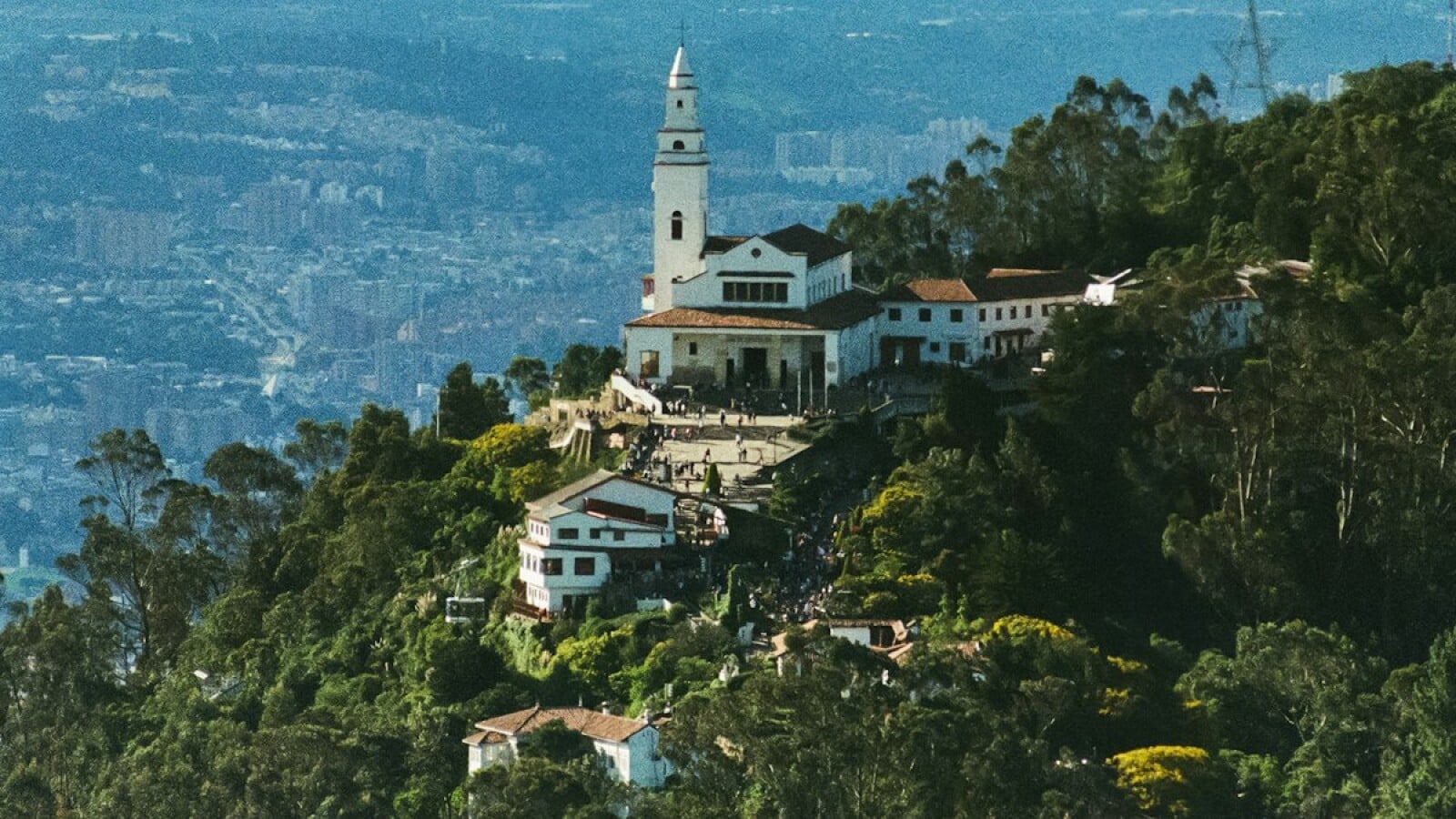
Chía sits on the high plateau known as the Sabana de Bogotá, at roughly the same altitude as the capital, so the climate is similar: mild days, cool evenings and rain that can arrive at any time of year. Flower farms, country clubs and gated residential developments (conjuntos) fill much of the land between the town centre and the main road. Many expatriate families choose it because a house with a garden is more attainable than in the northern districts of Bogotá.
The Autopista Norte is the main artery. Two of our three schools list addresses on it: Colegio Rochester at kilometre 15, entering by Avenida 7ª in the Vereda Fusca, and Internacional SEK Colombia at kilometre 25, on the road towards Sopó, in the Vereda Yerbabuena. Those are very different positions on the Sabana, and a family living in Chía town may find one close and the other a real drive. The school journey also depends on direction: families commuting from northern Bogotá to a Chía campus are travelling against some of the morning flow, but weekday peaks and weekend returns on the Autopista are heavy. Ask any school for its bus routes and drive the route yourself at the real hour.
Two practical consequences follow. First, if one parent still works in Bogotá, the school run and the office commute need to be planned together. Second, school buses matter more than usual: Rochester says it runs a transport service, and SEK Colombia lists a transport page on its website, but we could not find published routes for either, so ask for a zone map before deciding where to rent.
Curricula and school types in Chía
Colombian private schools follow the national curriculum and sit the national Saber 11 exam at the end of secondary. Where schools differ is in how they add languages and international credentials on top. In Chía, you will meet these models:
Colombian curriculum with a bilingual programme: the national qualification is the base, with English (and sometimes a third language) taught intensively. Colegio Rochester describes itself as a multilingual Calendar B school, and its stated goals include a top result in the national Saber 11 exam; we found no foreign diploma programme listed on its site.
Network schools with international programmes: part of a multi-country group, with exchange or immersion options abroad. Internacional SEK Colombia belongs to the SEK network, and its website advertises English immersion programmes at partner schools in England (St John's School, Devon) and the United States (Boca Prep International School).
IB schools: the IB's directory lists schools around the Sabana offering the Diploma Programme in English and Spanish. Check the exact campus and city, because several schools use similar names.
There is also the calendar. Many Colombian international schools follow Calendar B, from August to June, which matches northern-hemisphere universities; others follow Calendar A, from February to November. Rochester follows Calendar B, according to its own website. If you are arriving mid-year from Europe or North America, the calendar can matter more than the curriculum.
The schools
El Hontanar Bilingüe Internacional
El Hontanar Bilingüe Internacional is a private, co-educational, secular school on the Bogotá to Chía road, with a verified and recently updated entry in our directory. Our directory lists Spanish as the language of instruction alongside its bilingual positioning, and a monthly band of USD 1,000 to 2,000 per student. That band is an indicative range rather than a published tariff, and at recent exchange rates it equates to several million pesos a month, so it places the school among the pricier options in the area.
We could not read a fee schedule or admissions page for this school on its own website, so we cannot give stage ranges, dates or student numbers. The IB's directory lists a Gimnasio El Hontanar offering the Diploma Programme in English and Spanish, but its listing does not make clear that it is the same institution as the Chía school. If the IB matters to you, ask the school to confirm in writing which programmes are authorised on this campus and when.
It is a good example of the first step in any choice: where a school's public information is limited, the visit and the written reply to your questions become the evidence. Ask about class sizes, hours of English per week, the university destinations of recent graduates, and what is included in the monthly fee.
Colegio Rochester (Rochester School)
Colegio Rochester is a private, co-educational school on a country campus on the Autopista Norte. According to its website, it teaches from Prejardín, at about four years old, to Undécimo, the last year of secondary, and has about 1,042 students and eight students per teacher. It describes itself on its website as joining the Nord Anglia global community. The school says it has 66 years of history.
Its educational model is unusual: it is built on William Glasser's Choice Theory, together with cooperative learning and an emphasis on learning applied to real problems. The school says that from Prejardín children develop English and Spanish to full bilingual level, and that from Octavo they add Portuguese or French, aiming for B2 to C1 in CELPE-Bras or DELF/DALF and for C1 to C2 in English through the TOEFL iBT. Those are the school's stated goals, not published results; ask for recent outcomes.
Admissions are online. The school says there is no entry bond. Parents request contact, apply on its platform, and both attend a one-hour interview while the child does an activity; applicants from Transición to seventh grade sit an exam instead. After a place is assigned, parents accept, enrol online and complete a parenting workshop before the year starts. Campus visits run on Tuesday and Wednesday mornings. The application form offers entry for 2026-27 and 2027-28.
Internacional SEK Colombia
Internacional SEK Colombia is a private, secular, co-educational school at kilometre 25 of the Autopista Norte, on the road to Sopó. Its website describes a bilingual programme from Preescolar to Undécimo and lists early childhood, primary and secondary stages. It belongs to the SEK network of 26 schools, two universities and one higher-studies centre in 17 countries, according to the group's own site.
The school promotes English immersion options abroad, in Devon in England and at a school in the United States, which is a real differentiator for families who want an exchange element. Its public pages do not detail the IB, the language split, fees or student numbers, so request those directly. The admissions office invites families to book a personal visit.
It is the school to consider if you live in the northern or eastern side of Chía, towards Sopó, and want a network behind your child. Because it sits well beyond the town centre, treat the commute as the first thing to test.
Fees and how to budget
None of the three schools publishes a full fee table on the pages we could read. Colombia's rules explain why quotes arrive in a particular form: according to the Ministry of Education (MEN), private pre-school, primary and secondary schools set enrolment (matrícula), monthly pension (pensiones) and materials fees within parameters that the Ministry publishes by resolution before each school year, for example Resolución 018959 of 7 October 2020 for the 2021 year. We have not verified the percentage that applies for the current year, so ask each school which parameters it is applying and in which regime it is classified.
For a rough sense of scale, our directory shows a band of USD 1,000 to 2,000 a month for El Hontanar. For the other two we have no figure, and we would not guess. Ask for the matrícula, the pensión for your child's grade, and the date by which each instalment is due, and work in pesos, since the fee is set locally even where families earn in dollars or euros. If your income is in a foreign currency, build a margin for exchange-rate moves.
Extras to include in your comparison:
Matrícula (annual enrolment) and any admission-test or application fee
Monthly pensión and its number of instalments
Educational materials and digital platform fees
Uniforms, books and supply lists (Rochester posts yearly lists by level)
School bus by zone, and lunches
Exam fees such as TOEFL, DELF or IB, and international trips
Practical advice for choosing
Decide the commute before the school. Pick the two or three areas of Chía and northern Bogotá where you would live, then check which campuses are reachable in a tolerable time. A great school forty minutes away in rush hour is a harder daily reality than a good one fifteen minutes away.
Define what you mean by international. If you want a path back to a home-country curriculum, an IB or British-style programme is the safer fit, and you should ask for evidence of authorisation. If you plan to stay in Colombia, a Colombian curriculum with strong English may be enough, and it keeps Saber 11 in play. Ask for the school's recent results, but remember that a stated goal is not a result.
Match the calendar to your arrival. A move in September into a February-to-November school means joining late, while Calendar B suits an August start. Ask whether mid-year entry is possible and what the assessment looks like.
Visit twice and ask the same questions everywhere. Book one visit during school hours and one at drop-off. Ask about class size, how English is taught per subject, support for children who arrive with little Spanish, staff turnover, fees in writing and what happens to the place if you move.
See the wider picture in Colombia
To see how these schools sit alongside the rest of the country, read our Best 11 International Schools in Colombia | Ischooladvisor Ranking 2026.
More guides to schools in Chía
Frequently asked questions
Is Chía part of Bogotá?
No. Chía is a separate municipality in Cundinamarca, just north of Bogotá on the Sabana. It shares the same plateau and climate, and the Autopista Norte links the two. Schools there have their own admissions, so commute time from your home is the first practical test.
Which international schools are in Chía?
Our directory lists El Hontanar Bilingüe Internacional, Colegio Rochester and Internacional SEK Colombia. Rochester says it joined the Nord Anglia community and follows Calendar B, August to June. SEK Colombia sits at kilometre 25 of the Autopista Norte towards Sopó. Always confirm programmes with each school.
How are school fees set in Colombia?
According to the Ministry of Education, private schools set enrolment, monthly pension and materials fees within parameters published by resolution before each school year, for example Resolución 018959 of 7 October 2020 for 2021. Ask each school which parameters it applies and request the full schedule in writing.


