
Best International Schools in Ulaanbaatar: 2026 Guide for Families
Quick answer: What are the best international schools in Ulaanbaatar? The main options are the International School of Ulaanbaatar (IB, from USD 24,800 a year), the British School of Ulaanbaatar (English curriculum and A Levels, MNT 22.5 million to 72.2 million), the American School of Ulaanbaatar (US Common Core, WASC) and the bilingual Canadian School of Ulaanbaatar. Most sit in Khan-Uul district.
Last reviewed: October 2026 by Catherine from ISA. Fee ranges are indicative; always confirm with the school.
Choosing among the best international schools in Ulaanbaatar is less about hunting through dozens of names and more about picking the right fit from a small, well-defined group. Mongolia's capital has four established English-medium or bilingual private schools that most expatriate families consider, and each follows a different curriculum: the International Baccalaureate, the English National Curriculum with Cambridge exams, an American Common Core programme and a Mongolian and Canadian blend.
That clarity is useful. Instead of comparing near-identical schools, parents in Ulaanbaatar are really choosing an educational pathway, a price point and a commute. This guide sets out what each school offers, what it costs according to its own published fee schedules, and which kind of family tends to be best served by it.
Ulaanbaatar for school-age families: geography, districts and the daily run
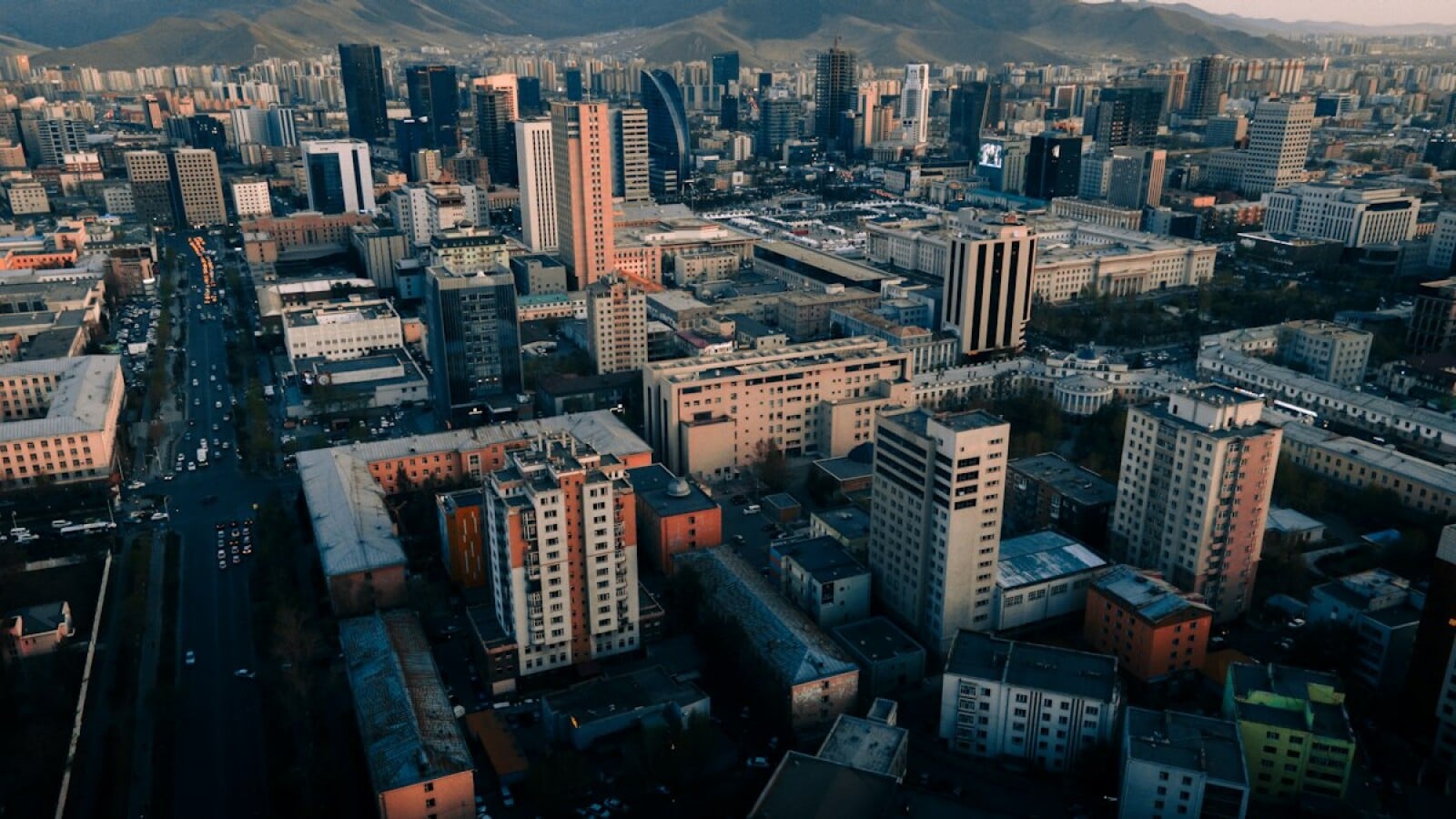
Families arrive in Ulaanbaatar mainly through mining and resources, diplomacy, development agencies, banking and a growing number of Mongolian returnees who studied or worked abroad and want an international pathway for their children. The city stretches east to west along the Tuul River valley, and the international schools are concentrated on the southern side, in Khan-Uul district, between the river and the Bogd Khan mountain.
The International School of Ulaanbaatar sits in the Four Seasons Garden area of Khan-Uul's 18th khoroo, the Canadian School is in the same khoroo on Hunnu 2222, and the American School is in the Zaisan area. The British School is on Naadamchidiin Road, also in Khan-Uul. In practice, many expatriate families rent in Zaisan or the new compounds of Khan-Uul precisely to stay close to these campuses.
The commute deserves real thought. Traffic on Peace Avenue and the bridges over the Tuul can be very slow at peak hours, and winter mornings are dark and well below freezing, with heavy air pollution during the coldest months. Living on the same side of the river as the school often matters more than any single feature of the school itself. All four schools run bus services, and the published bus prices give a hint of how far families travel.
Curricula available in Ulaanbaatar
- International Baccalaureate: the International School of Ulaanbaatar offers the Primary Years Programme, Middle Years Programme and Diploma Programme, all listed by the IBO with English as the language of instruction.
- English National Curriculum and Cambridge: the British School of Ulaanbaatar follows the National Curriculum of England and Wales from the Early Years Foundation Stage to the Sixth Form, with Cambridge A Levels in Years 12 and 13.
- American curriculum: the American School of Ulaanbaatar uses an adapted North American curriculum aligned with the US Common Core, with secondary courses based on the Massachusetts Curriculum Frameworks.
- Mongolian and Canadian (New Brunswick) blend: the Canadian School of Ulaanbaatar teaches in Mongolian and English and leads to both a Mongolian diploma and a New Brunswick diploma.
The shortlist: who each school suits
International School of Ulaanbaatar (ISU)
ISU describes itself as a private, non-profit, secular day school, and its history page says it began in September 1992 as the country's first international school, with CIS and NEASC accreditation first granted in 2003. The IBO lists all three of its programmes (PYP, MYP and DP). It moved to its Four Seasons Garden campus in 2007 and opened a secondary building in 2016.
For 2026-27, ISU's standard annual tuition runs from USD 24,800 for full-day Pre-kindergarten to USD 45,170 in the Diploma Programme, plus a USD 4,500 Capital Building Fund fee. Best fit: internationally mobile families who want a continuous IB pathway that transfers easily to the next posting. The school also publishes a lower "discounted rate" column, so ask early which rate applies to your contract or employer.
British School of Ulaanbaatar (BSU)
BSU teaches the English National Curriculum from Nursery to Year 13 and prepares Sixth Form students for Cambridge AS and A Levels, with subjects such as Further Mathematics, the three sciences, Business Studies, History, Art and Global Perspectives. The school says it holds COBIS Compliance and Patron's Accreditation, awarded in 2018, and it has been inspected under the British Schools Overseas framework. From October 2026 it is again an official Digital SAT test centre.
Its admissions policy is described as academically non-selective, with an entrance assessment used to check that the school can meet each child's needs. Fees are published in tugrik, which suits families paid locally. Best fit: families heading for UK universities, or children already in a British system, who want the same key stages and exam structure without disruption.
American School of Ulaanbaatar (ASU)
ASU was founded in 2006 in the Zaisan area and reports 880 students in 2026 (460 in Elementary and 420 in Secondary) with about 130 full-time faculty and staff. It holds a six-year accreditation from the Western Association of Schools and Colleges, which the school says is the highest term WASC awards. Secondary classes are capped at 24, and older students follow credit-based pathways towards university entry in English-speaking countries.
ASU does not publish tuition figures in text on its website, so families need to request the current fee sheet from the admissions office. Best fit: families planning North American university applications, or those who want a US transcript and a large peer group close to the Zaisan residential area.
Canadian School of Ulaanbaatar (CSU)
CSU blends the Mongolian national curriculum with that of New Brunswick, and graduates can receive both a Mongolian and a Canadian diploma. The school reports 988 students, around 80 teachers from 19 countries, a 12:1 student to teacher ratio and a maximum of 25 per class. Primary pupils have a Mongolian-speaking homeroom teacher, and maths is taught in both languages.
New entrants are tested in English, Mongolian and maths, and decisions are made on a rolling basis. Best fit: Mongolian or mixed families who want genuine bilingualism and a route to Canadian or Mongolian universities. For a newly arrived expatriate child with no Mongolian, the Mongolian-medium lessons make this a harder landing.
What the best international schools in Ulaanbaatar cost
Ulaanbaatar is unusual in that one school, ISU, publishes in US dollars while BSU and CSU publish in tugrik (ASU sends its fees on request), so your exposure to exchange rates depends on the school as much as on your salary. Using each school's own figures:
- ISU (2026-27, standard rate, USD): Pre-K 3 and 4 USD 24,800; PYP (KG to Grade 5) USD 34,850; MYP (Grades 6 to 10) USD 42,340; DP (Grades 11 and 12) USD 45,170.
- BSU (2026-27, MNT): Nursery 22,500,000; Reception 30,000,000; Year 1 37,700,000; Years 4 to 6 55,900,000; Years 7 to 9 62,300,000; Years 10 and 11 66,900,000; Years 12 and 13 72,200,000. Year 7 works out at roughly USD 17,000 to 18,500, depending on the exchange rate on the day you pay.
- CSU (2025-26 table, MNT per semester): roughly 19 million to 21.5 million for Grades 1 and 2, rising to roughly 28 million to 30.5 million for Grades 10 and 11, with two semester payments a year.
- ASU: on request from the school.
Extras to budget for, as listed on the schools' fee pages:
- Registration: USD 150 at ISU, MNT 550,000 at BSU, MNT 200,000 at CSU (non-refundable).
- Capital or development fees: USD 4,500 Capital Building Fund at ISU; MNT 5,550,000 Development Fee at BSU.
- Seat deposits: MNT 3,500,000 at BSU; at CSU, new students pay a seat deposit tied to the annual tuition.
- Book and library deposits: USD 120 library and USD 325 textbook deposits (Grades 6 to 12) at ISU; MNT 800,000 at BSU; MNT 200,000 at CSU.
- Transport: USD 1,250 a year at ISU; MNT 4,163,000 a year at BSU; zone-based pricing at CSU.
- Meals and uniforms: BSU lunch costs MNT 18,500 to 22,500 per day; CSU uses a cashless canteen card, and its tuition excludes uniforms, lunch and transport.
One legal point shapes the early years. Under Mongolia's General Law on Education (2023), general education is defined as a 12-year cycle, and parents have a duty to enrol children in pre-school education at the age of five (article 40.2.2). That is why the international schools' Reception and Kindergarten years fill quickly with local families as well as expatriates.
Practical advice for choosing well
Start from the exit, not the entrance. If your next move is likely to be Singapore, Dubai or Europe, an IB or British pathway will travel more easily. If university in the United States or Canada is the goal, ASU's credit-based high school or CSU's New Brunswick diploma may be more direct. Ask each school for its recent university destinations and look at where graduates actually went, rather than relying on general statements.
Visit in winter if you can. A tour in May shows a school at its best. A visit in January tells you how indoor sports, playground time and air filtration work when temperatures sit far below freezing, and how long the bus run really takes on icy roads. All four schools are in Khan-Uul, but the drive from the city centre or the east side can still be long.
Read the fee policy line by line. Check the payment deadlines (ISU's tuition is due on 1 August 2026 and its registration and capital fees on 1 June 2026), what happens to deposits if a posting is cut short, and whether your employer pays in dollars or tugrik. With two currencies in play, a few percentage points of exchange-rate movement can change your bill noticeably.
Compare the rankings
To see how these schools compare with others in the country, including reviews and profile details, browse our list of the best international schools in Ulaanbaatar and contact the schools directly to book a visit.
More guides to schools in Ulaanbaatar
- How to choose an international school in Ulaanbaatar
- International school fees in Ulaanbaatar
- International school admissions in Ulaanbaatar
- Bilingual schools in Ulaanbaatar
- best international schools in Ulaanbaatar
Frequently asked questions
Which international school in Ulaanbaatar offers the IB Diploma?
The International School of Ulaanbaatar in Khan-Uul district is an IB World School offering the Primary Years, Middle Years and Diploma Programmes in English. For 2026-27 its standard Diploma Programme tuition is USD 45,170 a year, plus a USD 4,500 Capital Building Fund fee and a USD 150 registration fee.
Do international schools in Ulaanbaatar charge in dollars or tugrik?
It depends on the school. The International School of Ulaanbaatar publishes its fees in US dollars, while the British School of Ulaanbaatar and the Canadian School of Ulaanbaatar publish theirs in Mongolian tugrik. If your salary is paid in another currency, exchange-rate movements between enrolment and the payment date can change the real cost.
Can my child join an Ulaanbaatar international school without speaking Mongolian?
Yes. The International, British and American schools teach in English, and the British School says every subject apart from language lessons is taught in English. The Canadian School of Ulaanbaatar is different: it is bilingual, tests new entrants in both English and Mongolian, and primary pupils have a Mongolian-speaking homeroom teacher, so a child with no Mongolian will find the transition harder.


