
Best International Schools in Guangzhou: 2026 Guide for Families
Quick answer: What are the best international schools in Guangzhou? For foreign-passport families, four schools cover most needs: the American International School of Guangzhou (full IB, RMB 229,280 to 303,900 a year), Harrow International School Guangzhou (British, A Levels, RMB 240,500 to 371,100), The British School of Guangzhou and Utahloy International School Guangzhou. Full-day tuition alone comes to roughly USD 31,000 to 56,000 a year.
Last reviewed: October 2026 by Emma from ISA. Fee ranges are indicative; always confirm with the school.
Before you compare curricula or campuses, check one thing: your child's passport. The best international schools in Guangzhou for expatriate families are, in legal terms, schools for the children of foreign personnel, and Chinese rules decide who may sit in their classrooms. That single filter removes many schools from a foreign family's list and explains why the shortlist below is short.
Once eligibility is settled, the next questions are curriculum and commute. A family on a three-year posting from Chicago, a British family planning UK university entry, and a European family that may move again in two years will each be better served by a different school. This guide sets out what separates them, using the schools' own 2026-27 fee schedules and admissions rules.
Guangzhou for school-age families: districts and commutes
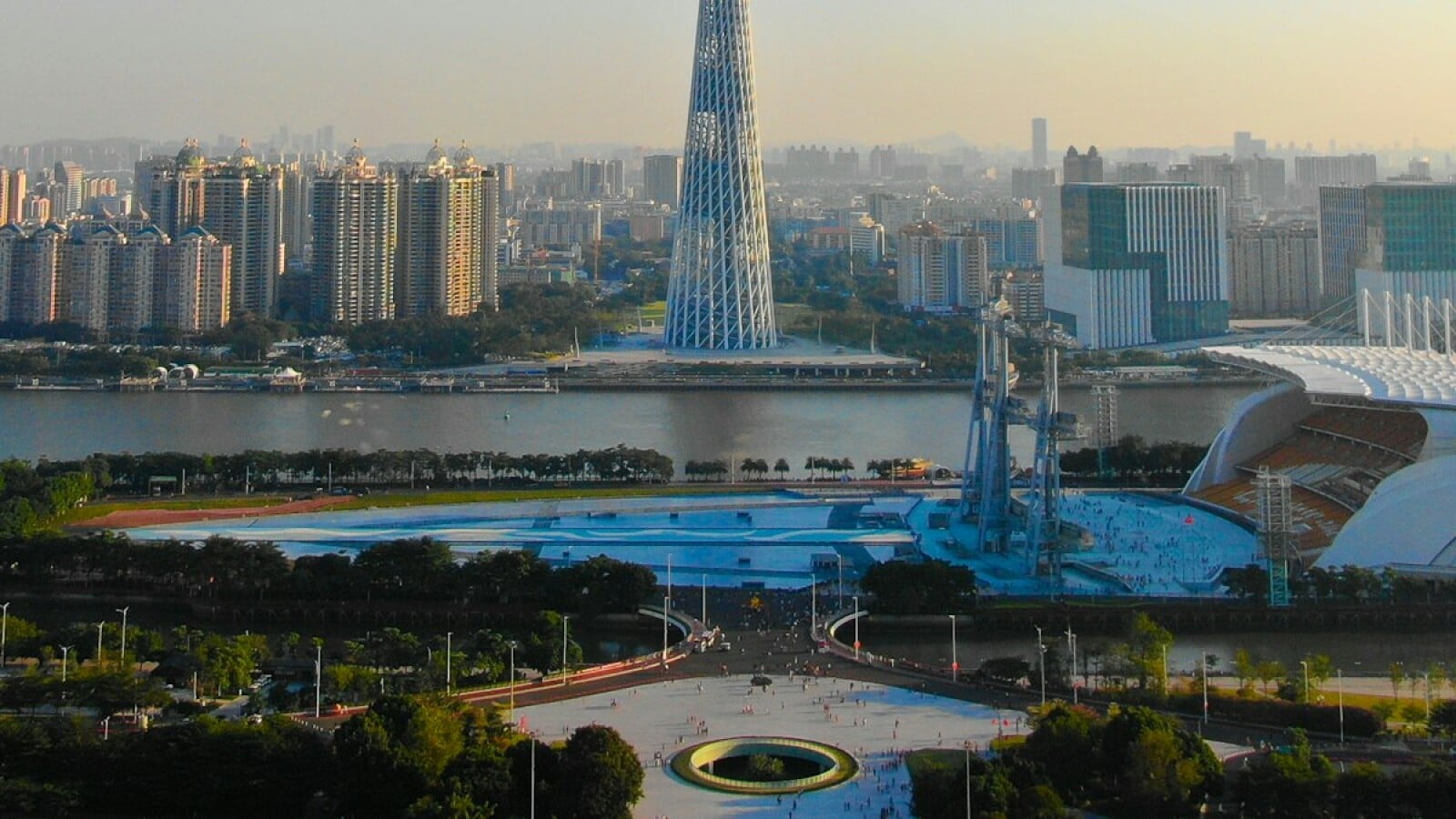
Guangzhou is the capital of Guangdong province and one of China's largest trading cities, which is why so many manufacturing, logistics and consular families arrive here. The city is big, and international schools are spread across several districts rather than grouped in one expat enclave. That spread matters more than many newcomers expect.
Tianhe and Zhujiang New Town are where many families rent, close to offices and consulates. Ersha Island, a quiet residential island in the Pearl River, hosts the early years and lower elementary campus of the American school. Huangpu District to the east, home to the Science Park and many industrial employers, has the American school's upper campus and Harrow's campus. Baiyun District in the north has The British School of Guangzhou and Utahloy. A family living in Zhujiang New Town with one child on Ersha and another in Science Park should plan around two school runs, or one long bus ride.
School buses are the norm, and their price rises with distance. The British School of Guangzhou, for example, lists bus fees of RMB 11,700 to 28,700 a year depending on where you live, so where you rent is as much a school decision as a housing one.
Curricula you can choose from in Guangzhou
- International Baccalaureate (IB): the American International School of Guangzhou runs the Primary Years, Middle Years and Diploma programmes, and Utahloy International School Guangzhou is also an IB World School. The IBO lists both in its school directory.
- English National Curriculum with IGCSE and A Levels: Harrow International School Guangzhou and The British School of Guangzhou follow the British pathway, with IGCSEs in Years 10 and 11 and A Levels in Years 12 and 13. Harrow says most of its A Level subjects are offered through Cambridge International.
- Mandarin and Chinese culture: taught as a subject across these schools. Chinese rules encourage schools for foreign children to offer Chinese language and culture courses, but the main language of instruction is English.
Shortlist: four schools and who each one suits
American International School of Guangzhou
AISG is a school for students from Pre-Kindergarten to Grade 12, split across two campuses: Pre-K to Grade 3 on Ersha Island and Grades 4 to 12 at 19 Kexiang Road in Science Park. It is an IB continuum school, running the PYP, MYP and Diploma Programme, which makes it a natural option for families who expect to move between countries, since IB schools exist in most major cities. The school says its teachers come from more than 20 countries.
AISG is clear about eligibility: it is a school for foreign passport holders, students with Hong Kong, Macau and Taiwan passports may apply, and holders of People's Republic of China passports are not eligible. It has no boarding and requires students to live with at least one parent who lives full time in the Guangzhou area. Tuition for 2026-27 runs from RMB 229,280 in Pre-Kindergarten to RMB 303,900 in Grades 9 to 12.
Tip: AISG holds an Open House in December, opens applications in January and starts offering seats in early April. Families already in Guangzhou should apply by early March, because local applicants sit an English test and an oral interview between mid-March and early April. Overseas applicants do not need to fly in for assessment.
Harrow International School Guangzhou
Harrow Guangzhou, at 23 Huanxin North Road in Huangpu District, is part of the AISL Harrow family of schools linked to Harrow School in London. It takes children from Pre-Nursery to Year 13 and follows a British pathway: IGCSEs in Years 10 and 11, then A Levels, with support for the Extended Project Qualification. Its A Level menu includes Further Mathematics, Economics, Psychology, Computer Science and Business.
It is also the option on this list with boarding, available from Year 5 upwards at RMB 110,300 a year, and the school is advertising a two-year boarding offer of RMB 50,000 in total for students enrolling in 2026-27. Eligibility follows the Guangzhou and Guangdong education authorities: foreign passport holders and holders of Hong Kong, Macau or Taiwan residency status can apply, alongside some overseas Chinese categories the school lists.
Tip: Harrow's sibling discount starts only with the third child (5%), so a two-child family pays full tuition twice. Applicants from Year 2 sit a computer-based test of roughly 70 to 90 minutes, and from Year 6 an English writing task, followed by an interview with the Head. The school warns of waiting lists in many year groups.
The British School of Guangzhou
BSG, part of Nord Anglia Education, sits on Tonghe Road in Baiyun District and teaches the English National Curriculum from a half-day Toddler class through IGCSE and A Levels. The school describes itself as the longest running British international school in Guangzhou. Its 2026-27 tuition ranges from RMB 211,000 in Nursery to RMB 301,000 from Year 10 to Year 13, with a half-day Toddler place at RMB 105,000.
Tip: BSG offers a 5% discount if the full year is paid by 15 June 2026, and charges RMB 10,000 a term for additional English language support until a student leaves the programme. Families whose children are still building English should factor that in.
Utahloy International School Guangzhou
UISG, in Baiyun District, belongs to the Utahloy Education Foundation, which was set up in Hong Kong in 2003 and also runs a campus in Zengcheng. The foundation says both of its schools are IB World Schools authorised to teach IB programmes from Primary through to Year 12. Its Guangzhou campus serves the north of the city, while the Zengcheng sister school lies further east. It does not publish a fee schedule as openly as the other three schools, so ask admissions for the current figures in writing.
Tip: if you like the IB but live in the north of the city, Utahloy may save a long cross-town commute to Science Park. Ask for a written answer on Diploma subject choices, which vary with cohort size.
Fees in Guangzhou for 2026-27
Annual tuition at the leading international schools sits roughly between RMB 210,000 and RMB 372,000, or roughly USD 31,000 to 56,000 at the European Central Bank's reference rates for 16 October 2026 (about RMB 6.69 to the US dollar). Early years places start lower at BSG and AISG; senior years at Harrow are the highest on this list.
- AISG: RMB 229,280 (Pre-K), 255,230 (K to Grade 5), 264,970 (Grades 6 to 8), 303,900 (Grades 9 to 12).
- Harrow Guangzhou: RMB 240,500 (Pre-Nursery) to RMB 296,600 (Years 1 to 5), RMB 340,300 (Years 7 to 9) and RMB 371,100 (Years 12 and 13).
- BSG: RMB 211,000 (Nursery) to RMB 301,000 (Years 10 to 13).
- Utahloy: not published in full online; ask the school.
Extras to budget for:
- Application fees: RMB 2,000 at AISG, RMB 2,500 at BSG and RMB 3,000 at Harrow, all non-refundable.
- Enrolment fees and deposits: a non-refundable RMB 10,000 enrolment fee at AISG for new 2026-27 students; a refundable RMB 20,000 deposit at BSG; a refundable RMB 25,000 resources fee at Harrow, held until your child leaves.
- Programme fees: AISG adds RMB 10,000 a year in Grades 11 and 12.
- Transport: RMB 9,600 to 19,200 a year at AISG and RMB 11,700 to 28,700 at BSG.
- Devices and meals: AISG lists laptops at RMB 7,000 to 8,500 and lunch at RMB 26 to 37 a day; BSG asks Year 10 to 13 students to bring their own computer.
- Uniforms and trips: BSG estimates uniforms at about RMB 3,200 a year; AISG lists trips and events at RMB 0 to 6,500.
Two pieces of Chinese law explain why these schools look the way they do. Under the Ministry of Education's 1995 interim measures on schools for the children of foreign personnel, such schools enrol the children of foreign nationals who hold residence permits in China and may not admit the children of Chinese citizens living in China. They are limited to secondary education and below, and they set their own curriculum and textbooks. The revised Regulations for the Implementation of the Law on the Promotion of Privately-run Schools, in force since 1 September 2021, tightened the rules for Chinese private schools offering compulsory education: they may not use overseas textbooks or hold subject-knowledge entrance exams. That is why bilingual private schools for Chinese nationals look very different from the schools above, and why the schools above ask for a foreign passport.
Practical advice for choosing well
Map the commute before you sign a lease. With campuses in Huangpu, Baiyun and on Ersha Island, the school you prefer should shape where you live. Visit at the time your child would travel; Guangzhou traffic at 7.30am is a different city from Guangzhou at noon.
Match the curriculum to your next move, not just this one. If your employer rotates staff every few years, the IB at AISG or Utahloy travels well. If UK sixth form or university entry is the plan, Harrow and BSG keep children on the IGCSE and A Level track without a switch at 16.
Read the refund rules as carefully as the fees. AISG keeps the full first semester fee if you withdraw after 1 July, and the second semester fee after 1 November. Corporate packages often pay tuition but not deposits, so ask HR which items they cover before you accept an offer.
See how Guangzhou compares across the province
If your job could take you to Shenzhen, Foshan or Dongguan, compare options across the region in our ranking of the best international schools in Guangdong, which sets these Guangzhou schools alongside their neighbours.
More guides to schools in Guangzhou
- Bilingual schools in Guangzhou
- International school admissions in Guangzhou
- International school fees in Guangzhou
- best international schools in Guangdong
Frequently asked questions
Can Chinese passport holders attend international schools in Guangzhou?
Generally not. Schools for the children of foreign personnel follow the Ministry of Education's 1995 measures, which bar the children of Chinese citizens living in China. AISG states that PRC passport holders are not eligible, while Hong Kong, Macau and Taiwan passport holders may apply. Chinese families usually look at private bilingual schools instead.
Which international school in Guangzhou offers boarding?
Of the main schools for foreign passport holders, Harrow International School Guangzhou in Huangpu District offers boarding from Year 5 upwards, at RMB 110,300 a year in 2026-27, with a two-year introductory offer for new boarders. AISG has no boarding and requires students to live with a parent who lives full time in the Guangzhou area.
When should we apply to international schools in Guangzhou for August entry?
Start in the autumn before your move. AISG opens applications in January, assesses local applicants from mid-March to early April and begins offering seats in early April, so aim to apply by early March. Harrow warns of waiting lists in many year groups, and mid-year places depend on availability.


