International School Admissions in Warsaw: 2026 Guide for Expat Families
Quick answer: how do international school admissions work in Warsaw? Most schools accept applications all year, ask for school reports and a signed agreement, and confirm places only after a fee and deposit. At British School Warsaw, published 2026-27 tuition runs from PLN 52,800 for Pre-Nursery to PLN 129,940 for Years 12 and 13, plus a PLN 4,000 deposit.
Last reviewed: October 2026 by David from ISA. Fee ranges are indicative; always confirm with the school.
Getting through international school admissions in Warsaw is mostly a matter of order and paperwork rather than competition. British School Warsaw and IAS both say they take applications all year round, so there is no single national deadline. What does matter is class size, because some year groups fill early and a few schools already describe the coming year as nearly full.
This guide walks through the steps in the order families meet them, from the first enquiry to the deposit. It also explains the Polish rules on compulsory schooling that sit behind every decision, and compares five schools whose published admissions or fee pages we could check. Where a school does not publish a detail, we say so instead of guessing.
Warsaw context: where the schools are and why families come
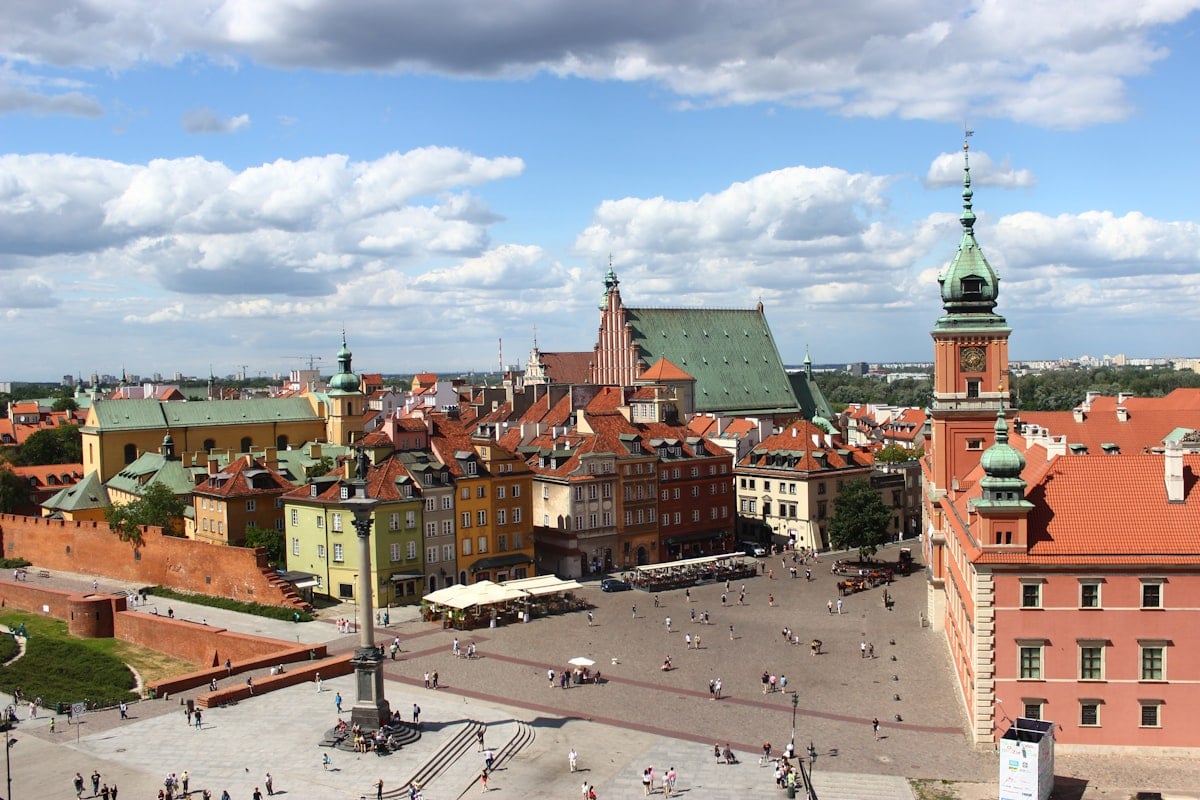
Warsaw is Poland's capital and its main hub for embassies, multinational offices and EU-linked work, so international schools serve a steady flow of arrivals who often start mid-year. The schools are spread across the city rather than clustered in one district. The Canadian School of Warsaw and parts of Thames British School Warsaw sit in or near Mokotów, Thames also has campuses in Ochota and Włochy, the International American School is on Stefana Dembego street in the south of the city.
Commutes decide more than most families expect. A school across town can mean a long rush-hour journey, so check whether the school runs buses (British School Warsaw lists home-school transport as an extra to its tuition) and whether the campus for your child's age is the one nearest your home. Thames and the Canadian School, for example, split their age groups across several addresses.
Polish rules that shape the timeline
Poland's education system is described by Eurydice, the European Commission's education information network. According to Eurydice, six-year-olds must complete one year of preschool preparation, and full-time compulsory schooling begins at the start of the school year in the calendar year in which the child turns 7. The obligation lasts until primary school is completed, and no longer than age 18, and young people must then continue in education or training. Poland's government portal for returning families adds that every child arriving in the country has the right to schooling on the same terms as Polish children, and that foreign school documents are accepted, translated into Polish but without a sworn translation. Rules do change, so confirm the current position on gov.pl before planning around a cut-off date.
For families in an international school, this matters in two ways. A child who is six in the calendar year must be in a preschool-preparation year, which most international schools cover through their Reception or Kindergarten class. And schools that combine an international programme with the Polish national curriculum, such as the Canadian School, issue Polish certificates, which makes later transfer into a Polish school simpler.
Curricula available in Warsaw
- English National Curriculum with IGCSE and A-levels: offered by the British schools, including British School Warsaw and Thames British School Warsaw.
- International Baccalaureate: the IB Diploma Programme is available at British School Warsaw and Thames, according to the schools, and the Canadian School says it delivers the Primary Years Programme.
- American curriculum: the International American School of Warsaw teaches a Pre-KG to Grade 12 programme and, on its website, lists International (IB), American and Polish diploma pathways.
- Multilingual and mother-tongue models: the International Trilingual School of Warsaw says it teaches through several national systems with native-speaking teachers.
Admissions at five Warsaw schools
International Trilingual School of Warsaw
ITSW is a small school that teaches language, literature and social studies in English, Polish and a third language, with teachers instructing in their own mother tongue. The school lists English, French, Spanish, Japanese, Chinese, German, Portuguese and Polish among its languages and says its programme is designed so pupils can move between international and national schools. Because the school describes itself as small, class places are limited, so ask early which year groups have space. A useful question at the first visit is which third language is available for your child's age group, since the language mix depends on the cohort.
Thames British School Warsaw
Thames says it educates children from 2.5 to 19 years old across four campuses: Ochota, Włochy, Mokotów Primary and Mokotów High School. It describes itself as accredited by Cambridge Assessment International Education for the Cambridge Upper Secondary programme and authorised to deliver the IB Diploma Programme. In practice, the campus your child joins depends on age, so book a visit at the right site rather than the nearest one. Families who arrive mid-year should ask whether the sixth-form route (Cambridge or IB) is available from the year their child would start.
The British School Warsaw
The British School Warsaw is part of the Nord Anglia Education group and publishes the clearest admissions pathway of the schools we checked. Its admissions page lists six steps: enquiry, campus tour (in person or virtual), online application, supporting documents, a placement decision, and payment of fees and a deposit to secure the place. The school says it accepts applications all year and replies within 24 hours. The minimum enrolment age is 2.5 years. Its 2026-27 open days are an Early Years session on 20 November 2026 (ages 2.5 to 5) and a Primary session on 18 February 2027, and the Secondary open day took place on 16 October. It runs an English as an Additional Language programme for pupils with little English, and says non-Polish students start learning Polish as an additional foreign language from Year 1. Its published fee table also lists specialist learning support, charged termly (PLN 3,600 for each of the first two terms and PLN 1,800 for the third), which is worth asking about at the same time as the application.
International American School of Warsaw
IAS offers Pre-KG to Grade 12 at Stefana Dembego 18 in the south of the city and says admissions are open for 2026/27 and 2027/28. Its apply-now page sets out six steps: an online application for each child (siblings can share a form), transcripts and a recommendation letter, a signed Educational Agreement, review by the admissions office, payment of an enrolment fee, and a welcome letter. Documents include certificates and transcripts from the last two years, three ID photos and, for returning applicants moving up a year, a certificate of promotion. The page does not describe an entrance test, applications are accepted year-round, and mid-year entry is possible when a place exists in the grade. Paying the non-refundable enrolment fee places a child on the waiting list for a class, and the school says most classes are full for 2026/27, so apply early. Its age table runs from 3.5 to 4.5 for Pre-KG up to 17 to 18 for Grade 12.
The Canadian School of Warsaw
The Canadian School describes a preschool for ages 3 to 6 following the IB Primary Years Programme in English, and an elementary school for Grades 1 to 8 (ages 6 to 14) that combines the PYP with the Polish national curriculum. We could not open the school's own website, so confirm the following with it: the school's description gives 2026-27 tuition of roughly PLN 42,000 a year in the youngest preschool groups to PLN 51,000 a year in Grades 4 to 8, paid in ten instalments. If correct, that is the lowest of the figures in this comparison. Because it stops at Grade 8, families should ask where graduates usually continue, since the school year after Grade 8 is a transition point in the Polish system.
Fees: what admission costs in practice
Fees are not the focus of an admissions guide, but the first payments are what turn an offer into a place, so budget for them. Of the schools checked, British School Warsaw publishes the fullest 2026-27 table: annual tuition from PLN 52,800 for Pre-Nursery to PLN 129,940 for Years 12 to 13, with Years 3 to 6 at PLN 117,780 and Years 7 to 9 at PLN 122,960. Fees are payable in three terms, and the school quotes a PLN 4,000 deposit, refundable when the child leaves, with the first term's tuition for new students PLN 4,000 higher. The Canadian School's reported range above, unconfirmed, sits well below that. IAS lists tuition in a fees section of its website, which we did not check, so request the schedule with your application.
- Enrolment or registration fee: non-refundable at IAS; amount to be confirmed with the school.
- Deposit: PLN 4,000 at British School Warsaw, refundable on leaving.
- Specialist support: English as an Additional Language and special-needs support are charged separately at British School Warsaw.
- Meals, uniform and transport: not included in British School Warsaw tuition.
- Exams and trips: IGCSE, IB and A-level registration and school camps are extra.
- Notice period: British School Warsaw requires three months' written notice to withdraw.
Practical advice for a smooth application
Start with the documents. Gather the last two years of school reports and certificates, a recommendation letter from the current school, passport photos and your child's passport or residence details. Poland's government portal says translations into Polish are expected for Polish public schools, though not sworn ones; international schools usually accept English reports, but ask.
Match the start date to the term calendar. British School Warsaw runs terms from 25 August to 16 December 2026, 7 January to 25 March 2027 and 12 April to 25 June 2027, and charges mid-year starters pro rata. Joining at the start of a term usually makes settling in easier, but all-year applications mean you do not have to wait for September.
Ask about waiting lists and language support at the first contact. A school that says classes are almost full may still have places in other year groups or campuses. Ask, too, whether your child will have an English-language assessment, how Polish is taught to non-Polish speakers, and who covers learning-support costs.
Visit more than one school. Open days are the quickest way to see classrooms and meet admissions staff. British School Warsaw has an Early Years session on 20 November 2026 and a Primary one on 18 February 2027. Other schools run tours by appointment.
Compare more Warsaw schools
To see more schools and filter by curriculum and area, browse our Best international schools in Warsaw ranking.
More guides to schools in Warsaw
- International school fees in Warsaw
- Best international schools in Warsaw
- Bilingual schools in Warsaw
- How to choose an international school in Warsaw
- Best international schools in Warsaw
Frequently asked questions
When should I apply to an international school in Warsaw?
As early as you can. British School Warsaw and IAS both say they accept applications all year, but IAS says most classes are full for 2026/27 and waiting lists form by merit. Early Years and popular year groups fill first, so contact schools as soon as you know your move date.
What documents do Warsaw international schools ask for?
IAS lists transcripts from the last two years, a recommendation letter, a signed Educational Agreement, three ID photos and a promotion certificate. British School Warsaw says it needs supporting documents but does not list them publicly. Gather school reports, passport details and any learning-support reports before you enquire.
At what age does school become compulsory in Poland?
According to Eurydice, six-year-olds do one compulsory preschool preparation year, and full-time compulsory schooling starts in the calendar year a child turns 7, lasting until primary school is completed and no longer than age 18. International schools apply their own age bands, so confirm the class for your child's birth date.